Back
A custom B2B commerce platform and website for a hardware manufacturer
Project goal
To replace Domax's ageing B2B system with a platform of our own. Fast public website and a full trade-ordering system in one, wired straight into the manufacturer's ERP so partners can order the whole catalogue the way they work.
Our scope
UX/UI design
System architecture
Development
Project duration
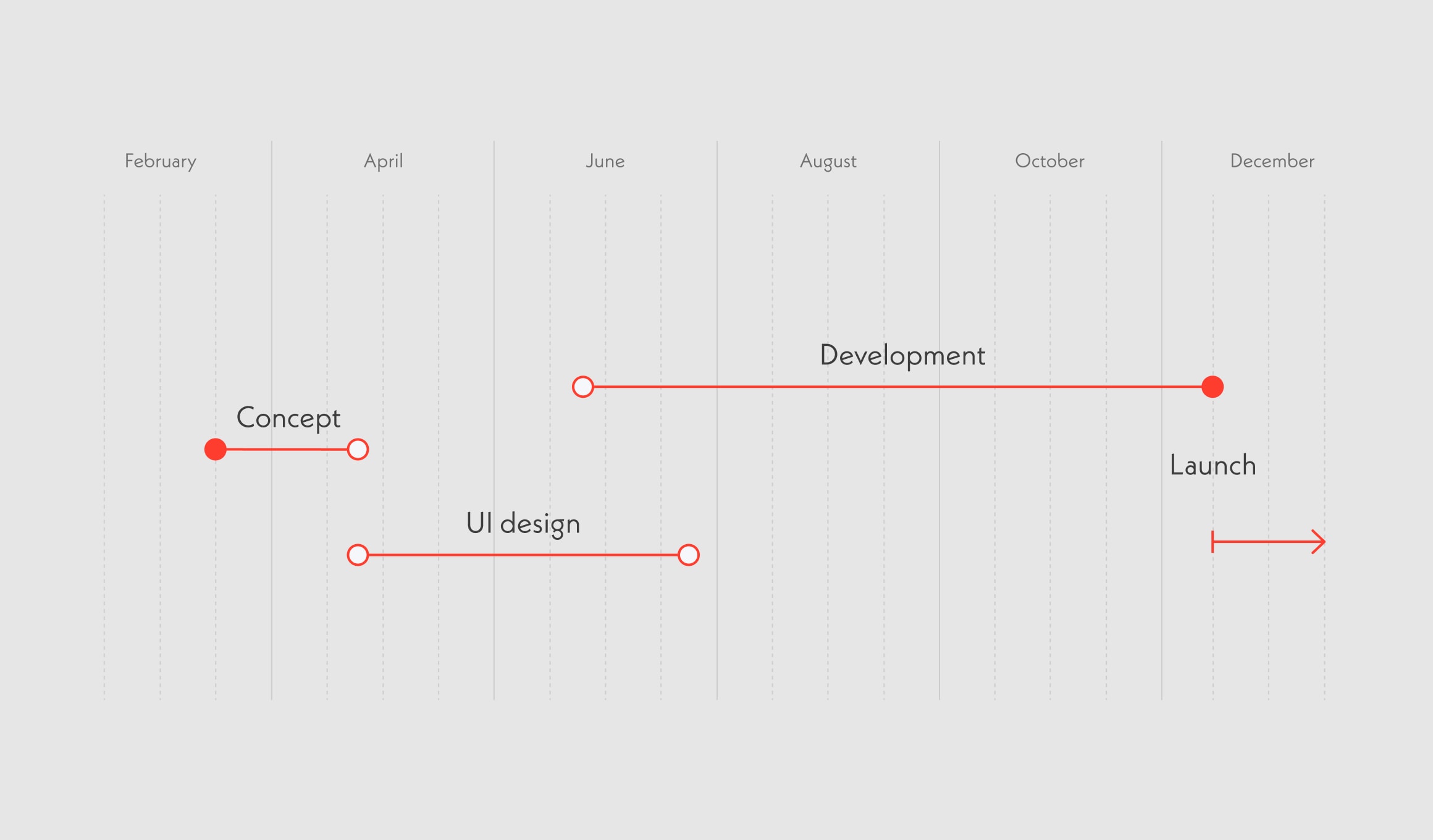
Since 2023
Ongoing partnership
Technologies used
Laravel
Backpack CMS
Next.js
Client
Domax
One of Europe's biggest hardware makers, on a platform it had outgrown
Domax is one of the largest manufacturers of timber connectors in Europe with more than thirty years of experience. Its business runs on trade partners who order from a deep catalogue again and again, at volume. Domax already had a B2B platform, but it had aged into a liability. So the company asked us to replace it and to rebuild its public website alongside. We took on all of it: the research, the UX and UI, the architecture and the build. We have been developing it with Domax since 2023.
Two products sharing one spine
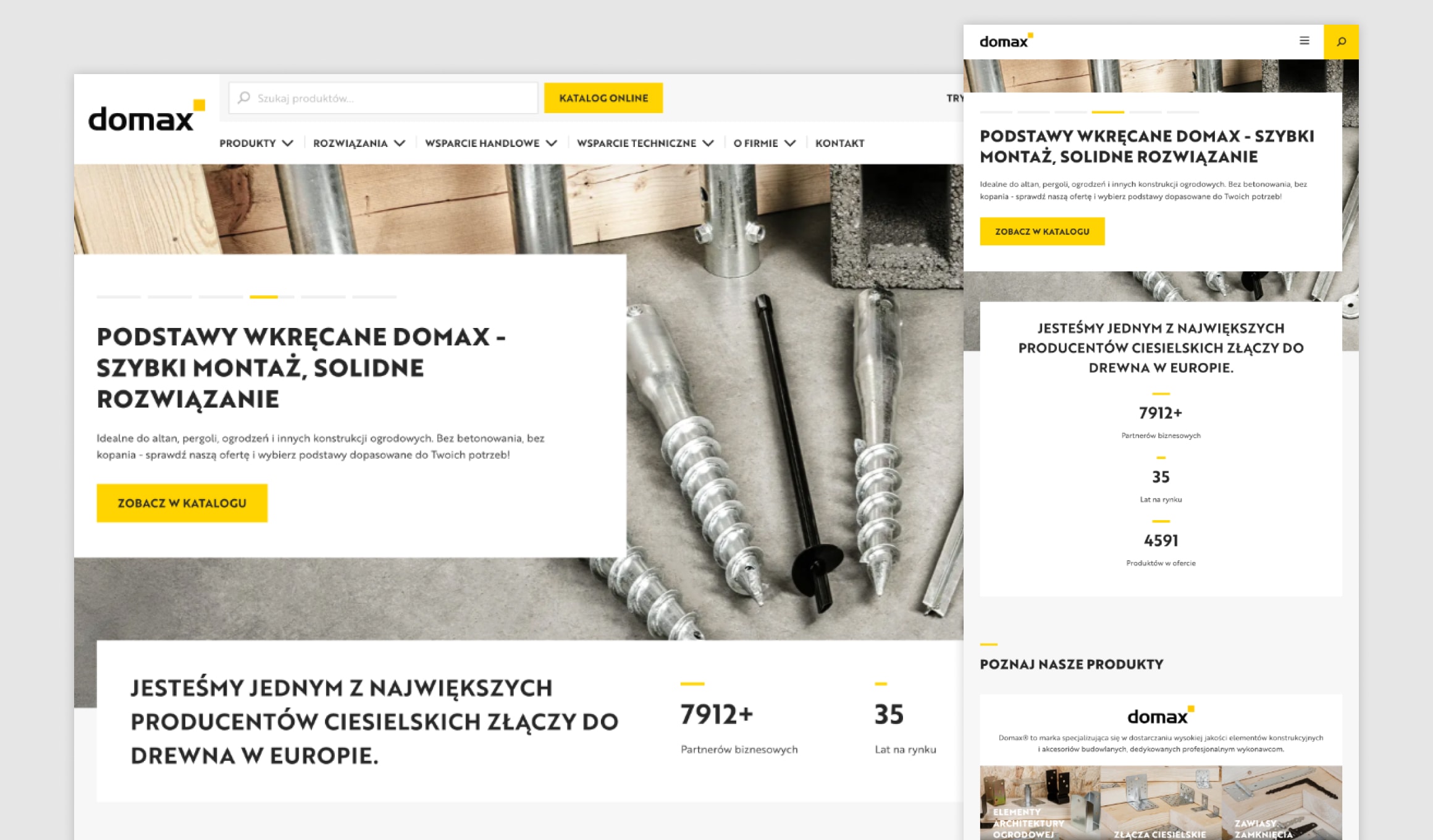
What we built is really two products with a single backbone. The public side is a marketing website that presents the whole Domax world, the products, the solutions, the technical support and the story of the company. Behind a login sits the serious part: a full B2B platform where trade partners browse the catalogue, build orders, track invoices and raise complaints. Both run from one system, so a change to a product or a translation shows up everywhere at once. The two never drift apart.
Built on our own Laravel B2B system and CMS
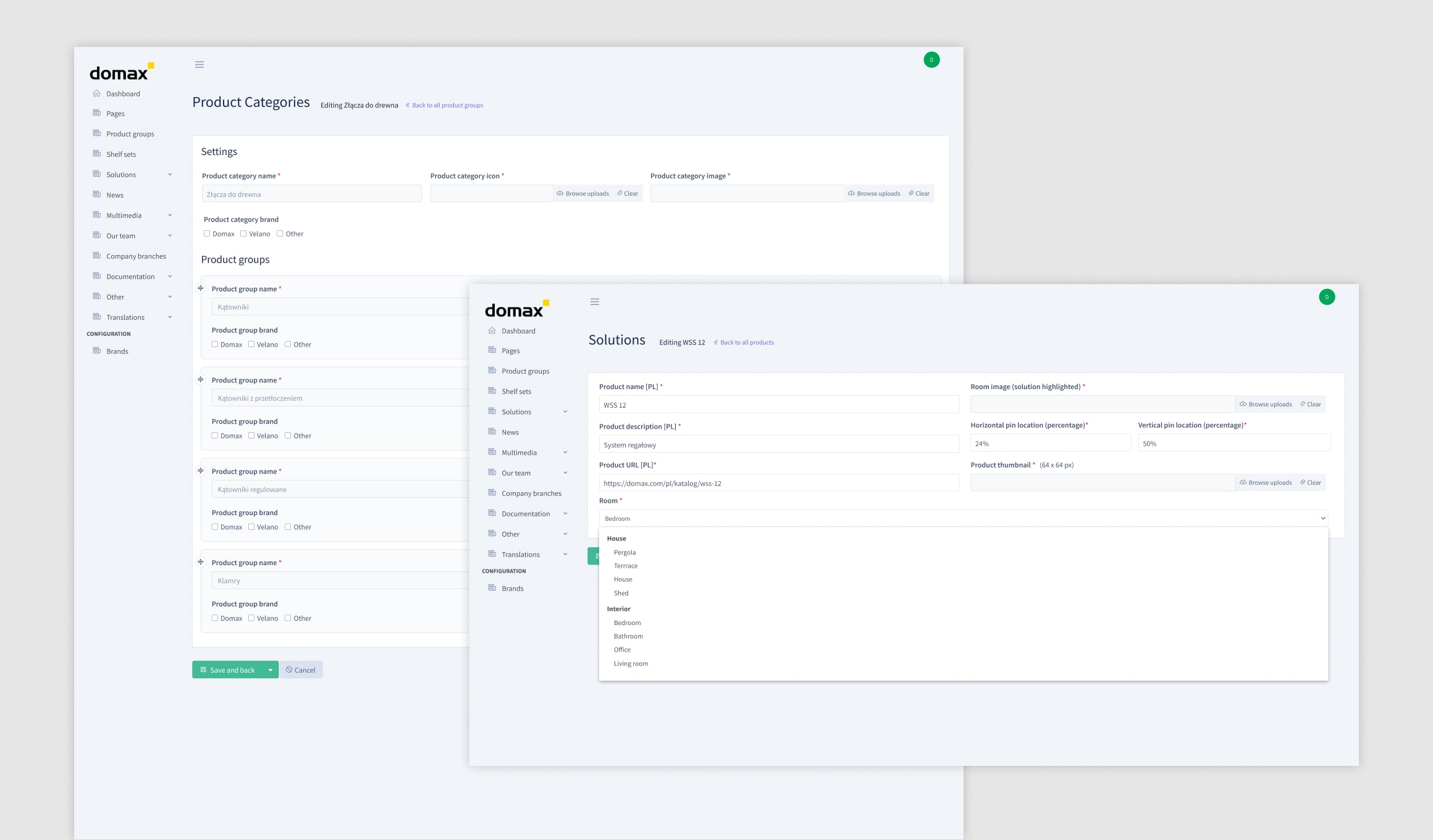
At the core is our own B2B commerce system, built on Laravel, paired with a content management system we run on Laravel Backpack. This is not an off-the-shelf shop bent into shape. It is a platform we wrote for exactly this kind of manufacturer. It gives Domax the two things it needed most. One is a trade-ordering engine that behaves the way a wholesale business really does. The other is a CMS the team controls itself, without coming back to us for every edit.
A Next.js storefront built on solid foundations
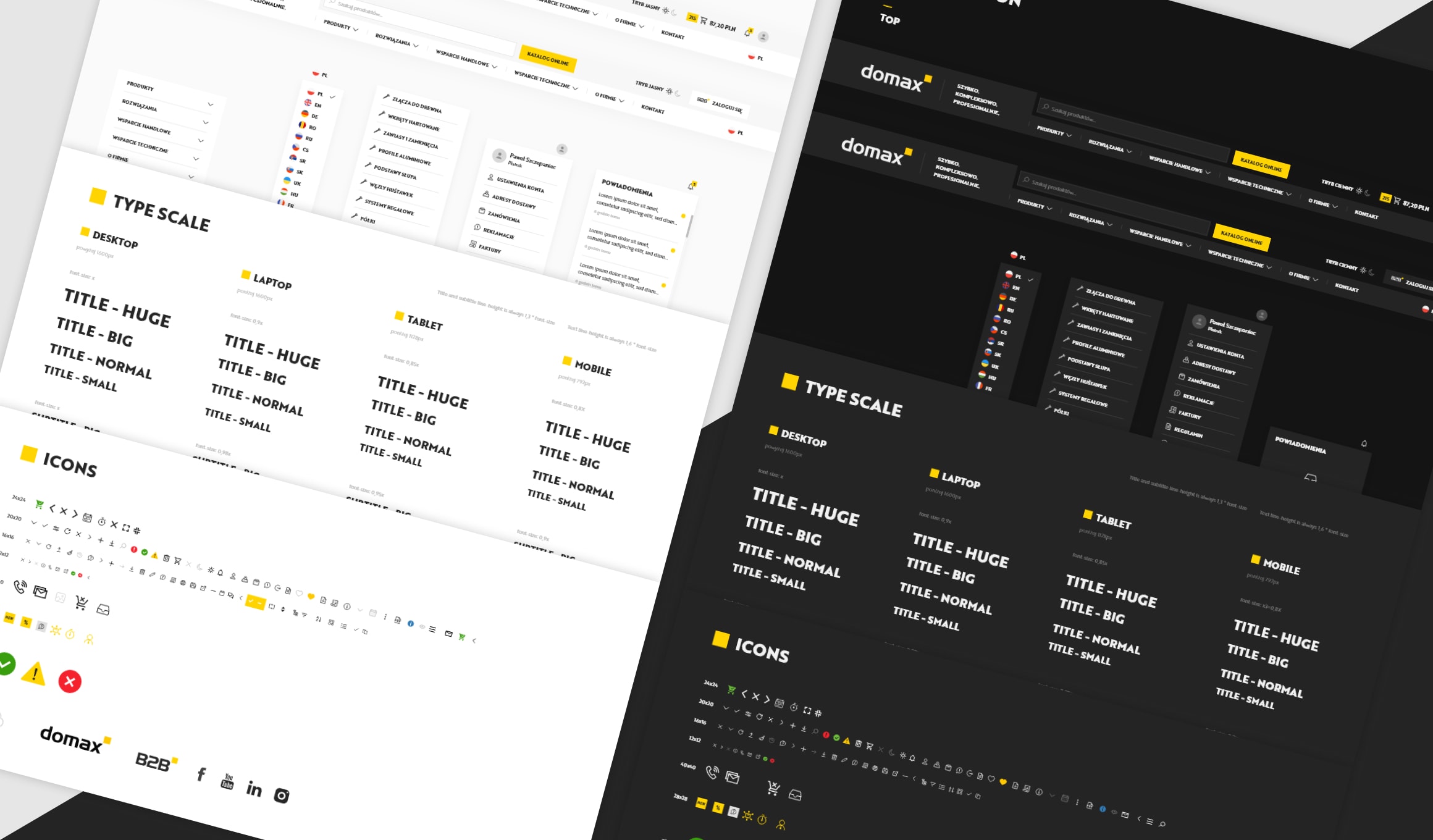
The storefront is a Next.js application. We built its foundation properly before a single page went up. There is a design system with a component library, a full dark theme alongside the light one, internationalisation from the start and the shared styling and routing that keep a big site consistent. It loads fast and it holds together across dozens of pages. That groundwork is a large part of why the site still feels solid years and hundreds of features later.
A catalogue built for how professionals actually buy
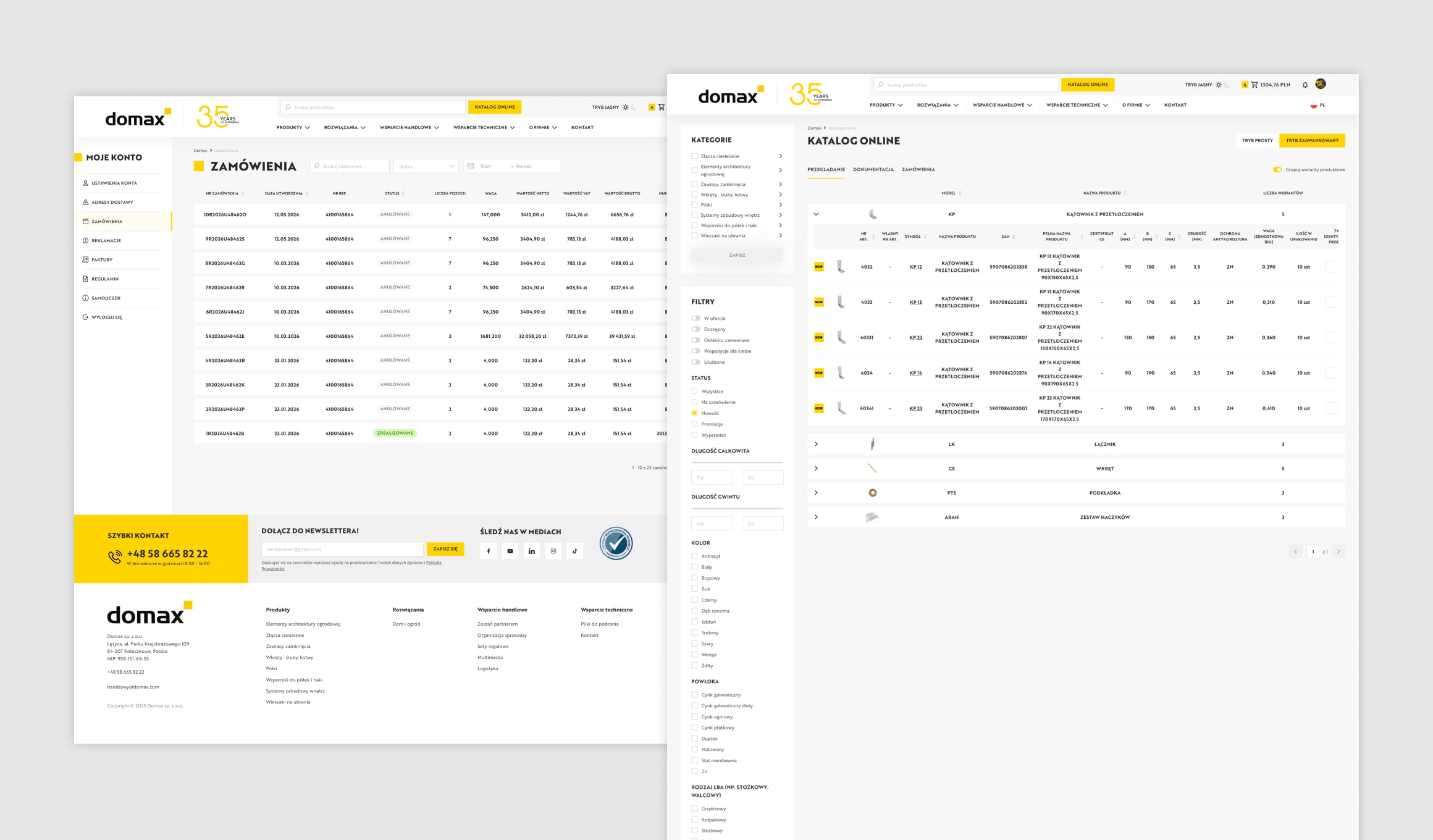
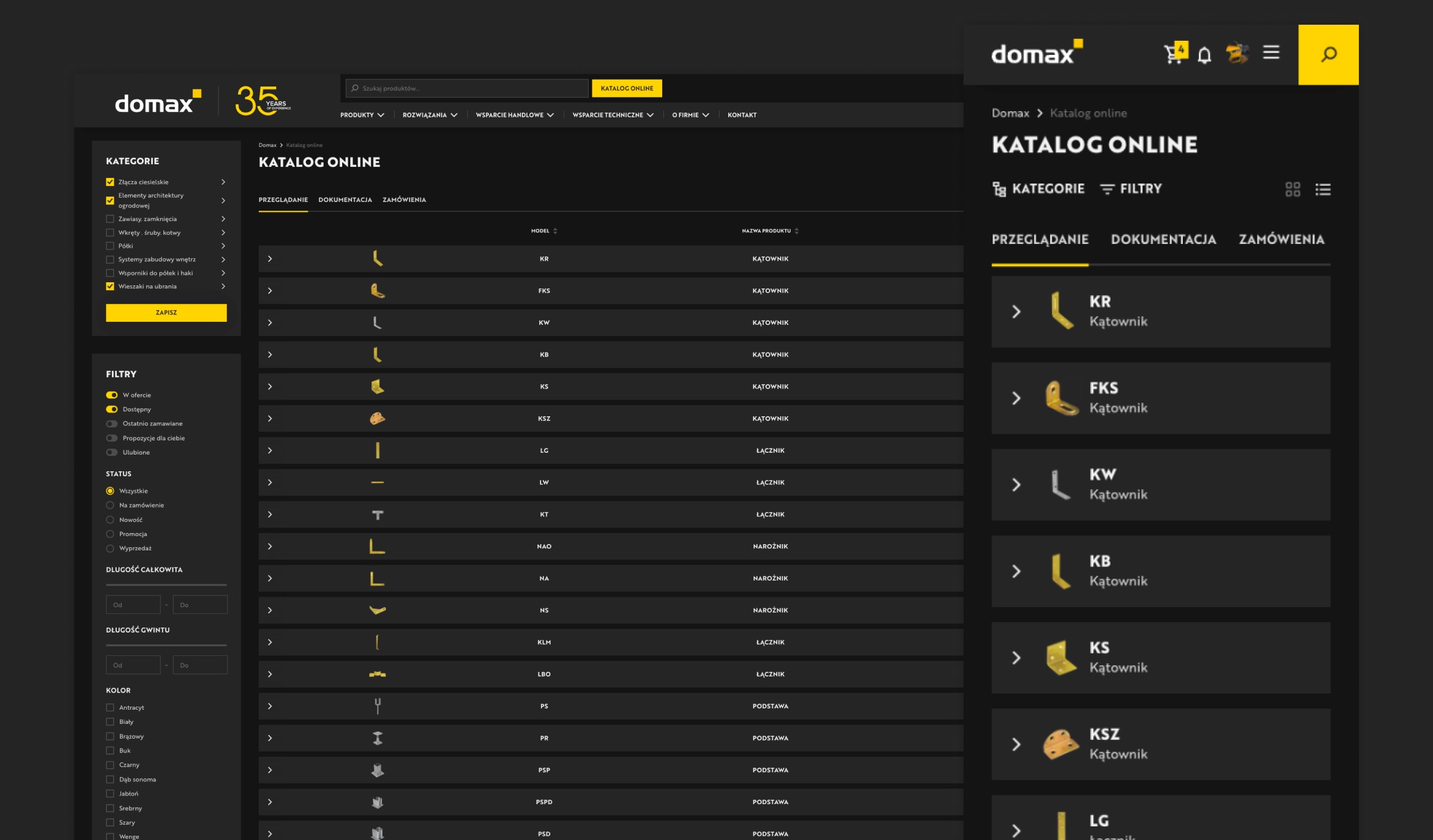
The catalogue is where a trade platform lives or dies, so we gave it real attention. Products are organised as models with their variants, the way Domax thinks about them. The catalogue offers a simple mode for quick browsing and an advanced mode for buyers who want everything on screen. In advanced mode a partner picks which columns to see, groups the rows how they like and switches view modes. The platform remembers all of it for next time, per tab, saved to their account. Filters adjust to what is on the page, since not every attribute applies to every product. Filtering reaches right down to the variant. It is a catalogue built for someone ordering fifty line items on a Tuesday morning, not for casual window-shopping.
A cart that thinks like a trade counter
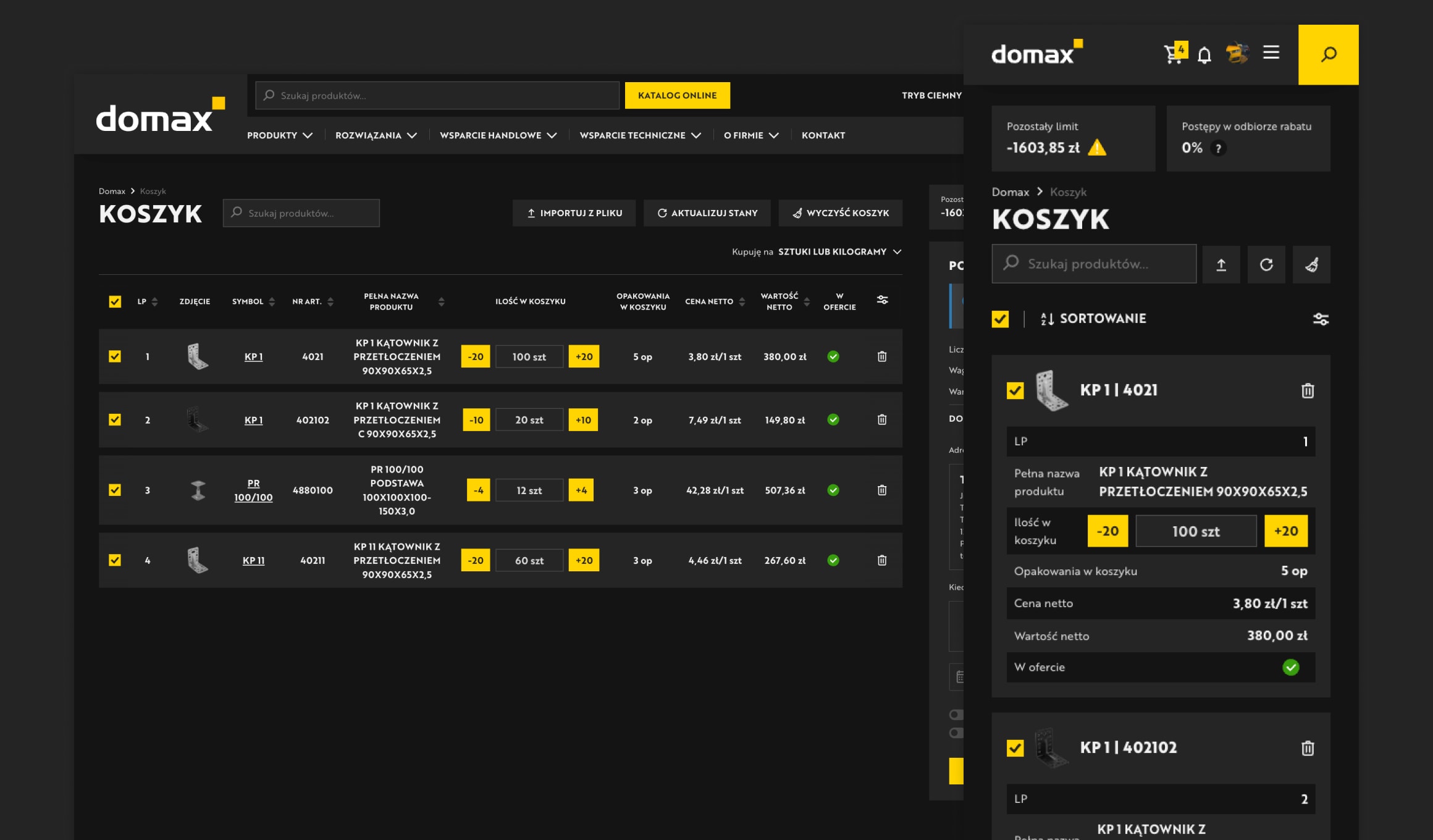
The cart is where the wholesale logic really shows. Change a quantity and the line updates against live stock straight away. When a partner is ready, the platform pulls current availability for the whole basket and shows honest warnings, that three of eleven lines are short or that a load is over a weight threshold, without ever blocking the order. A partner's trade credit limit and how much of it is used come through from the ERP, along with their negotiated discount and a note when invoices are sitting unpaid. Orders can be placed in packaging units, a whole basket can be imported from a CSV file and delivery addresses are handled at real scale, since a single account can carry hundreds of them.
Orders, invoices and complaints, the machinery of a real B2B relationship
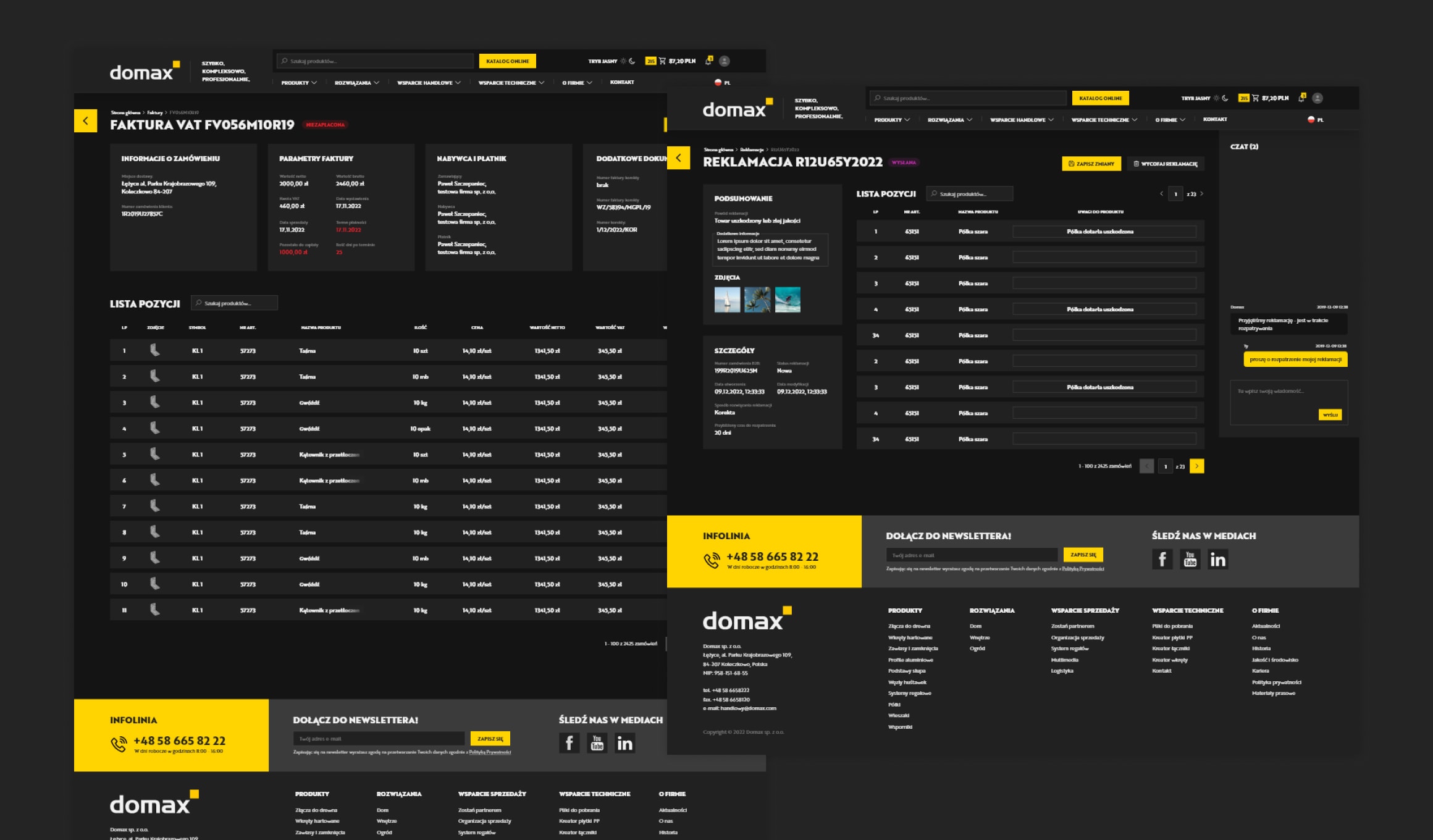
Around ordering sits everything a partner needs after the fact. Past orders can be filtered, exported to a file, downloaded as a PDF or dropped straight back into the cart to reorder. Invoices come with their statuses, download in more than one format and carry proper e-invoice handling. When something goes wrong, a partner raises a complaint against an order, attaches photos and works it through with Domax over a built-in chat, watching the status change as it moves. It is the unglamorous plumbing that a wholesale relationship actually runs on.
Wired straight into the manufacturer's ERP
None of that works without a deep tie into Domax's own systems. The platform is really the modern face of the manufacturer's ERP: prices, stock, credit limits, invoices and order data all flow from it, in real time, into the experience the partner sees. We built the integration so the storefront always reflects the truth in the back office rather than a stale copy of it. We also exposed a B2B API of our own, so approved partners can pull product and price data straight into their own systems.
A CMS the Domax team runs the whole thing from
The CMS is the quiet hero of the project. Domax runs the entire public website from it, the product groups and categories, the news timeline, the team, the multimedia, the shelf sets and the rest, all edited in one place on Laravel Backpack. It goes well beyond text. The team manages translations across languages, overrides category names and slugs, sets promotional banners per company, controls the order of things per language and even clears the Next.js cache or watches background jobs from inside the panel. The aim was to hand Domax as much control as possible, so the marketing team ships changes without a developer in the loop.
A marketing website that carries the whole Domax world
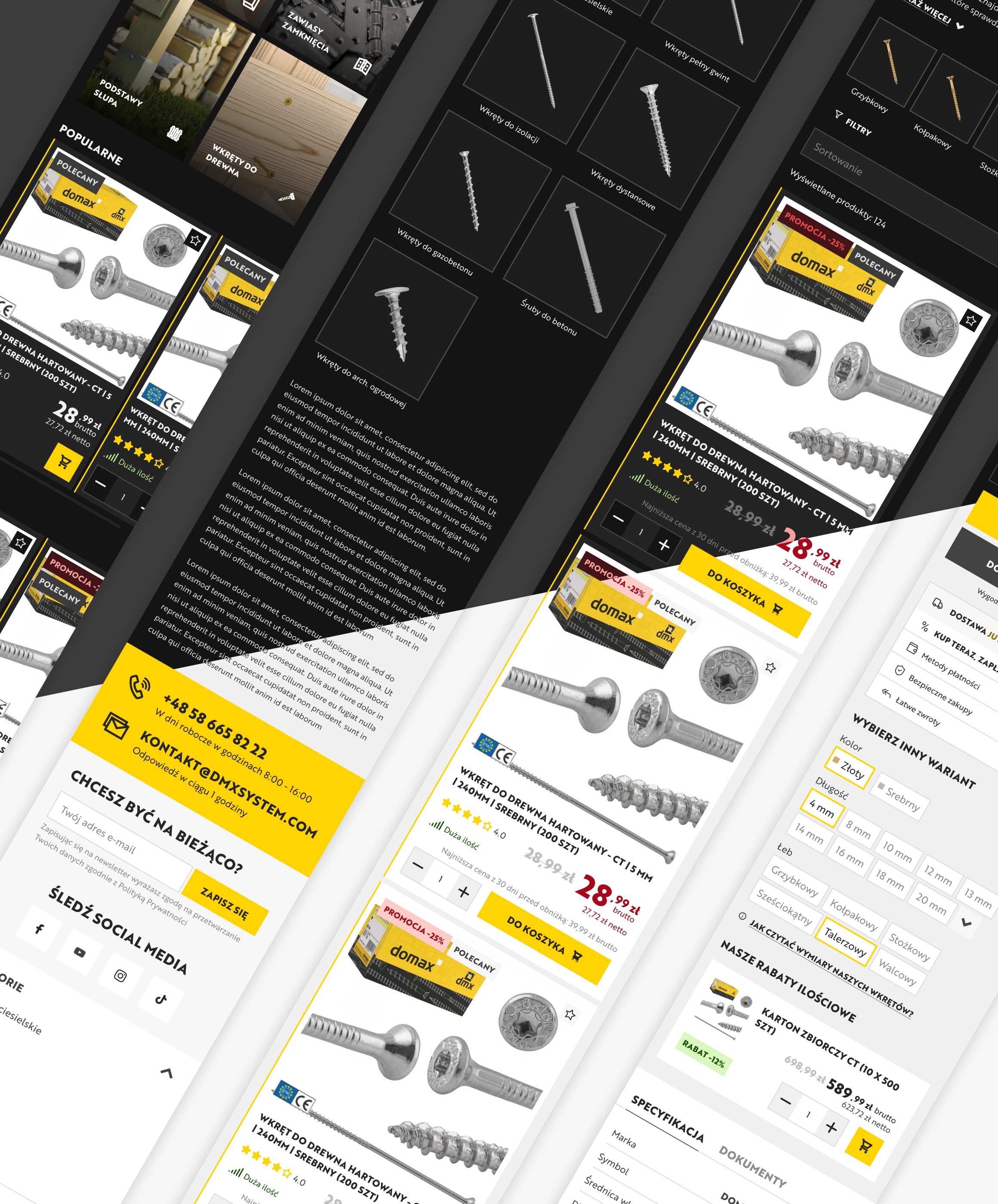
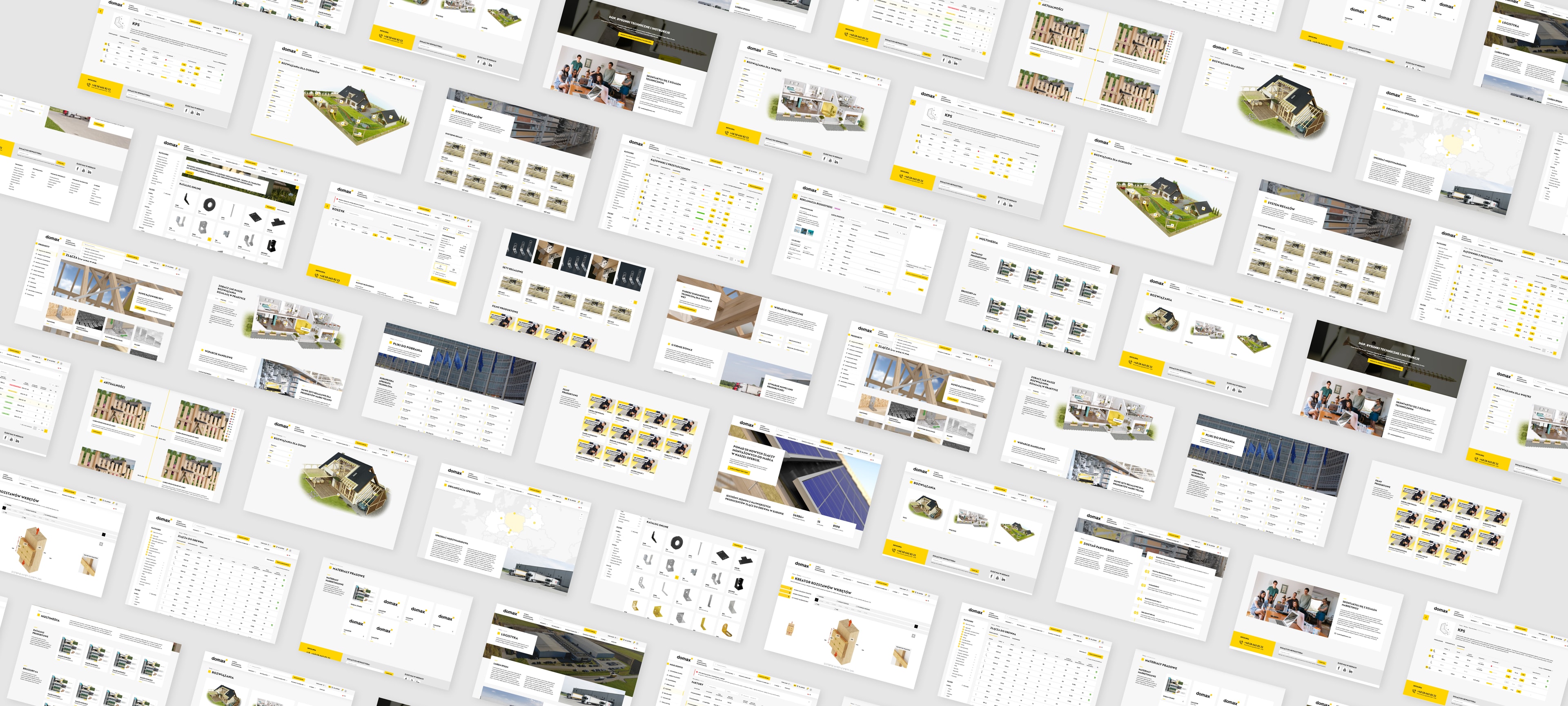
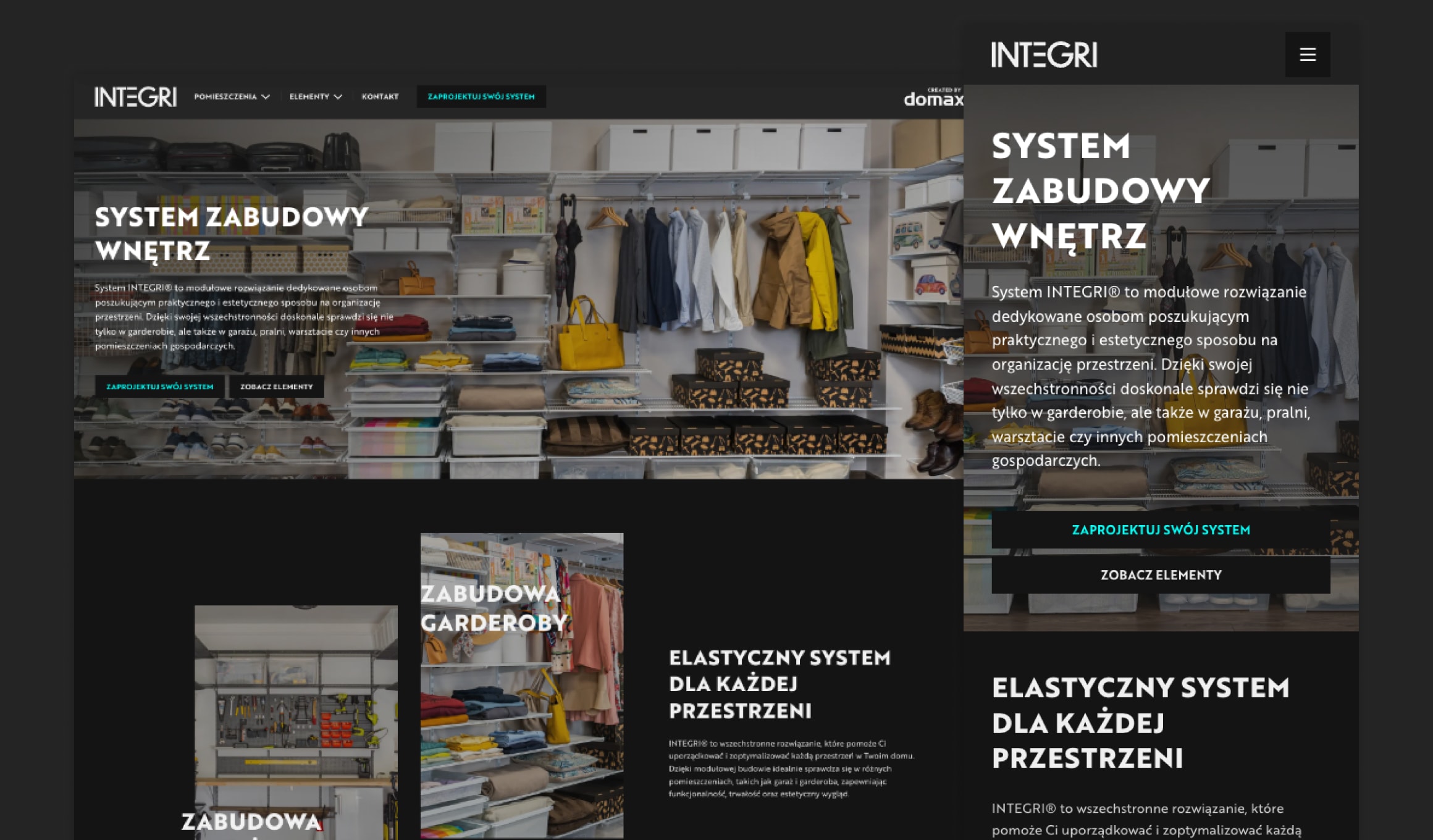
The public site brings together a lot. Visitors can browse Domax's ranges, from timber connectors and anchors to garden architecture and the INTEGRI system. An interactive solutions view shows where products fit. Partners get commercial support, ready-made shelf layouts, and access to a multimedia library of catalogues and brochures. There's a downloads area with all the ETA certificates and trade approvals needed. The company timeline shares Domax's story. For INTEGRI, there's even a 3D configurator to design a system and get a parts list. All of this is managed in a single CMS.
Moved off the old platform without pausing the business
All of this replaced an older B2B platform that Domax had outgrown. We went through what the old system did and decided what genuinely needed to carry over. We moved the business onto the new platform without interrupting the trade that runs through it every day. The partners kept ordering. The system underneath simply became one Domax could build on again.
Roles, languages and companies, each partner sees their own version
A manufacturer's B2B is not one audience but many. Roles come through from Domax's systems and decide what each user sees, so a buyer, a manager and a viewer each get the tabs and rights that suit them. The platform is multi-company and multi-language, with currencies following the language a partner chooses. It wraps the whole thing in the security a trade account needs, from login through to onboarding tutorials that walk new partners in. Everyone gets an experience shaped to who they are, without the clutter of what they do not need.
A platform that keeps growing, the project DMX grew from
This has become one of our longest and closest partnerships. We have been shipping on Domax since 2023. The platform has grown by well over a hundred features since launch, from a promotions module to two-factor sign-in to steady refinements across the catalogue and cart. It also led somewhere. Once the B2B platform was running, Domax asked us to build DMX, the consumer-facing store that sells the same products to individual buyers. The B2B came first. DMX grew from the ground it laid.
Outcome
What Domax has now is a single system that carries its public face and its wholesale business at once, wired into the ERP so partners order against the real catalogue, real stock and real credit. It keeps growing, one release at a time. It is the kind of long partnership we build for.
Visit domax.com
Let's talk about your project idea!
Tell us about your project. We’ll help you plan the architecture, scope, and execution.
© Webalize 2026