Back
Headless Shopware + Next.js store for a building-hardware manufacturer
Project goal
To build Domax its own producer-direct store end to end, from the first analysis to a fast headless platform that serves trade buyers and DIY customers alike.
Our scope
Analysis
UX/UI design
Development
Optimisation
Project duration
January-June 2026 (~6 months)
Ongoing partnership
Technologies used
Shopware 6
Next.js
Elasticsearch
Redis
Cloudflare
Client
DMX System (Domax)
Domax wanted to sell direct, on a store it owned outright
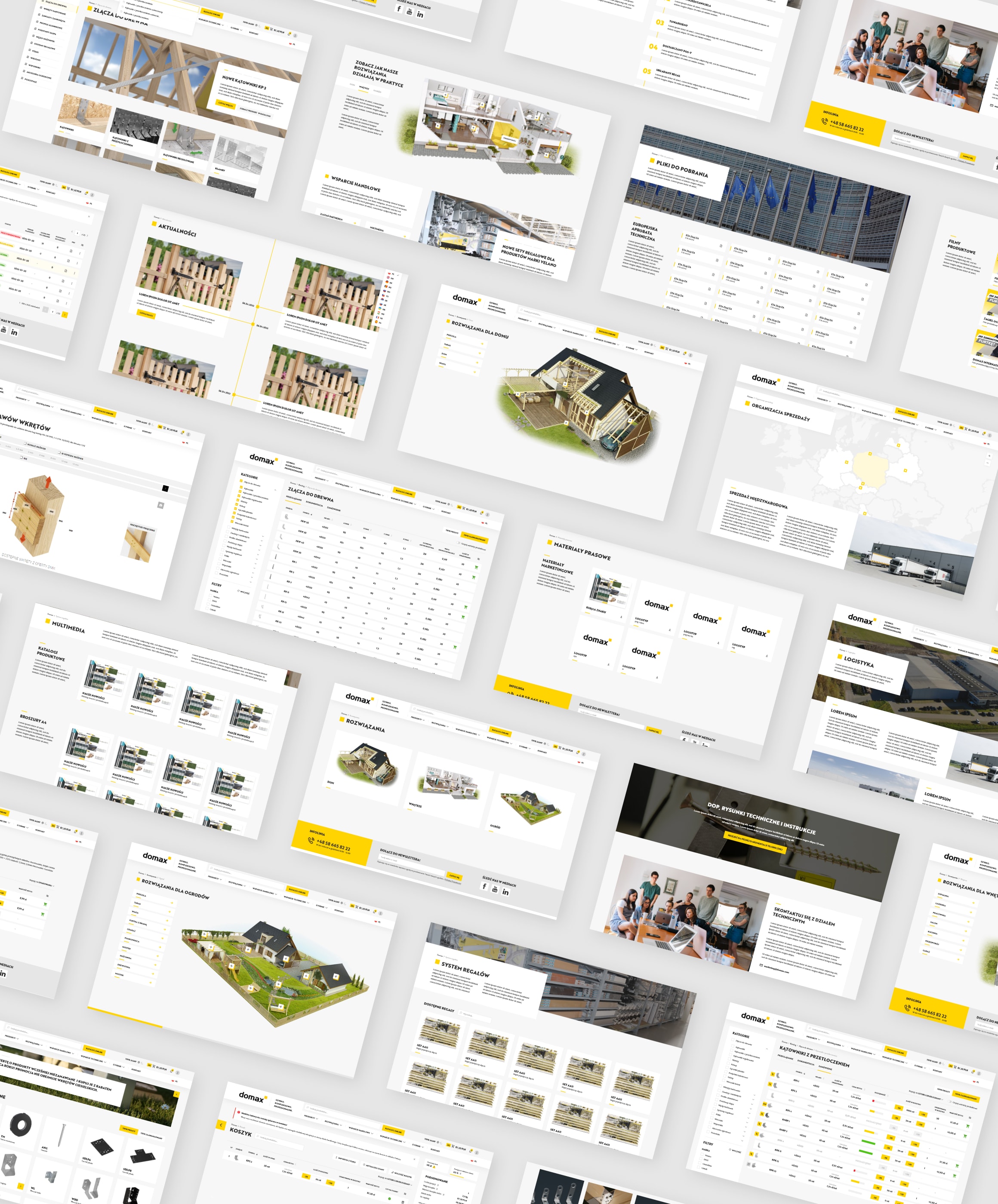
Domax has been making timber connectors and mounting hardware in Poland since 1991 and today ranks among the largest producers of its kind in Europe. Its customers fall into two groups: contractors and carpenters who buy in volume, alongside DIY builders fitting out a garden or a roof at the weekend. The brand wanted a shop of its own - DMX System to sell straight from the source rather than only through distributors. We were responsible for the whole process, from the analysis and UX/UI through to development and optimisation. We still run and develop the store with them as their project and technology partner.
We started by setting the spec, not by writing code
Before any development began, we closed out the analysis. We wrote up the search logic the store would need and documented the SEO rules up front, so none of it had to be retrofitted later. We combined what Shopware needs at checkout with a custom design, rather than bending the experience to fit platform defaults. By the time we had annotated the mockups and cleared the remaining threads in Confluence, a loose brief had become something the team could build against without guessing.
Shopware 6 on the backend, Next.js on the frontend
We ran the store headless. Shopware 6 holds the commerce logic and the catalogue, while a Next.js frontend renders everything visible to customers. The two communicate through a custom API that covers the catalogue, the cart, customer accounts, returns, shopping lists and the rest of the store's behaviour. In the end we built a dedicated component library for DMX on top of shadcn/ui - tailored to the store. Multi-storefront support went in from the start, ready for the markets and brands that may come later.
A catalogue built for people who buy by the box
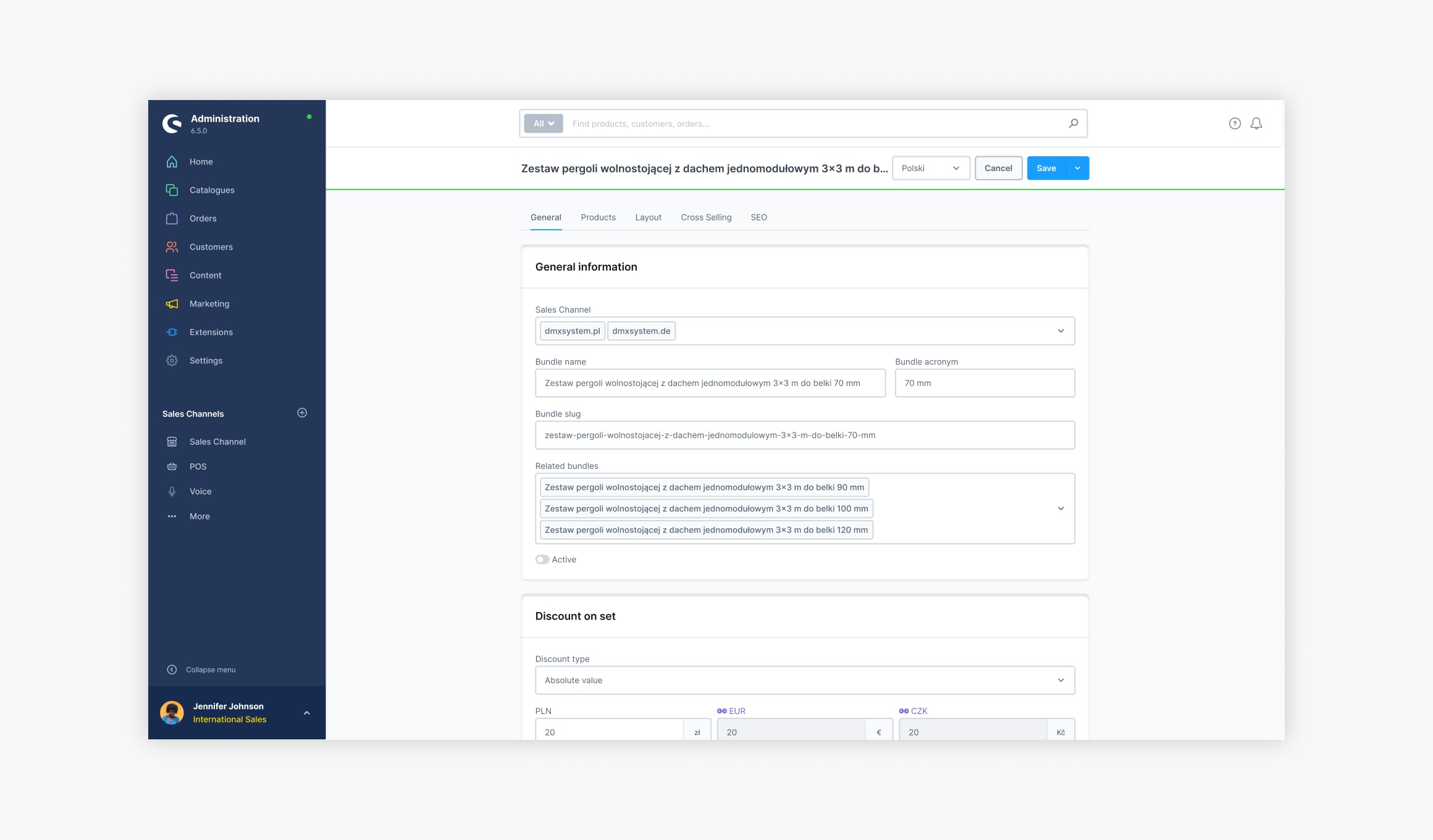
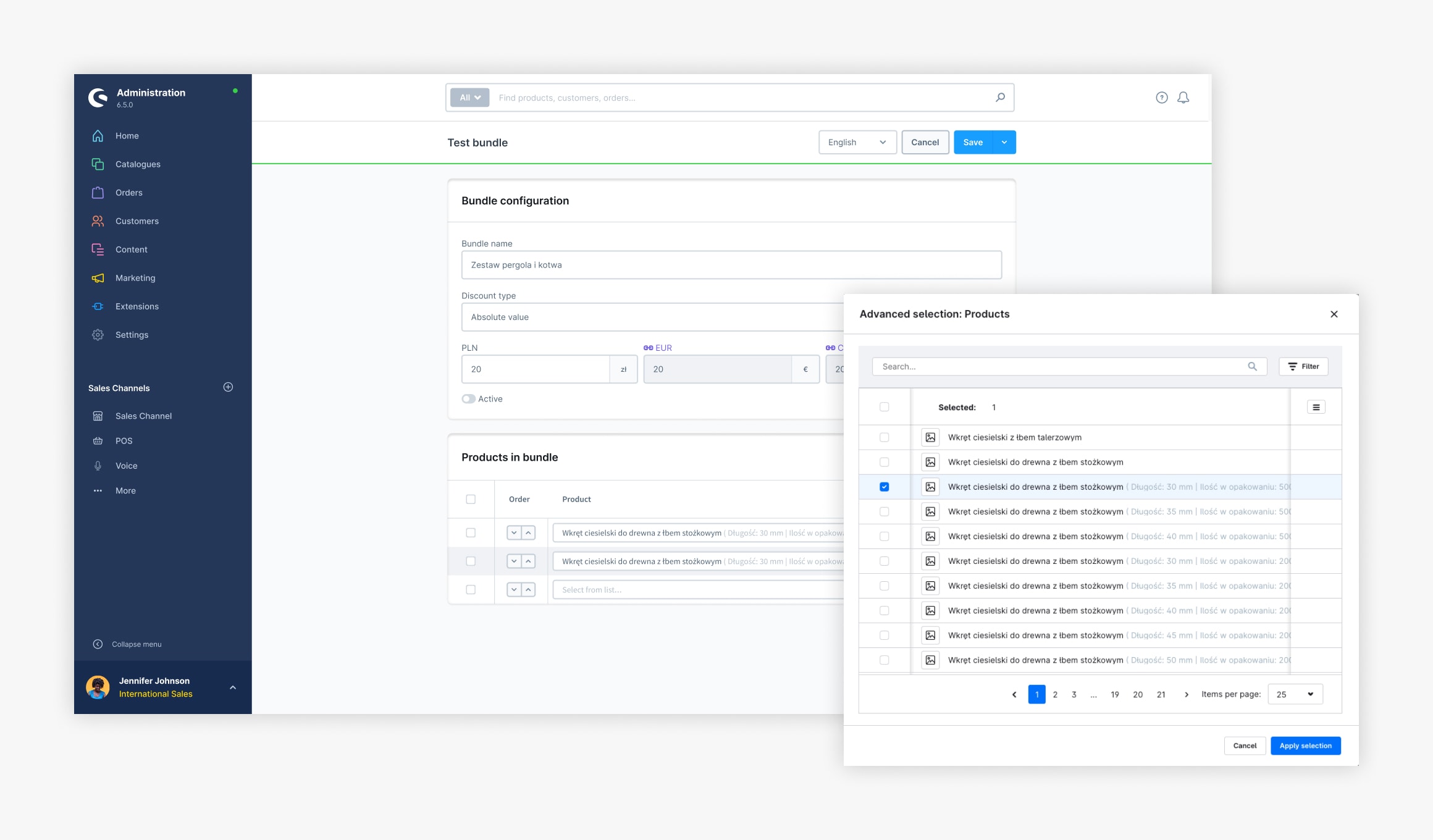
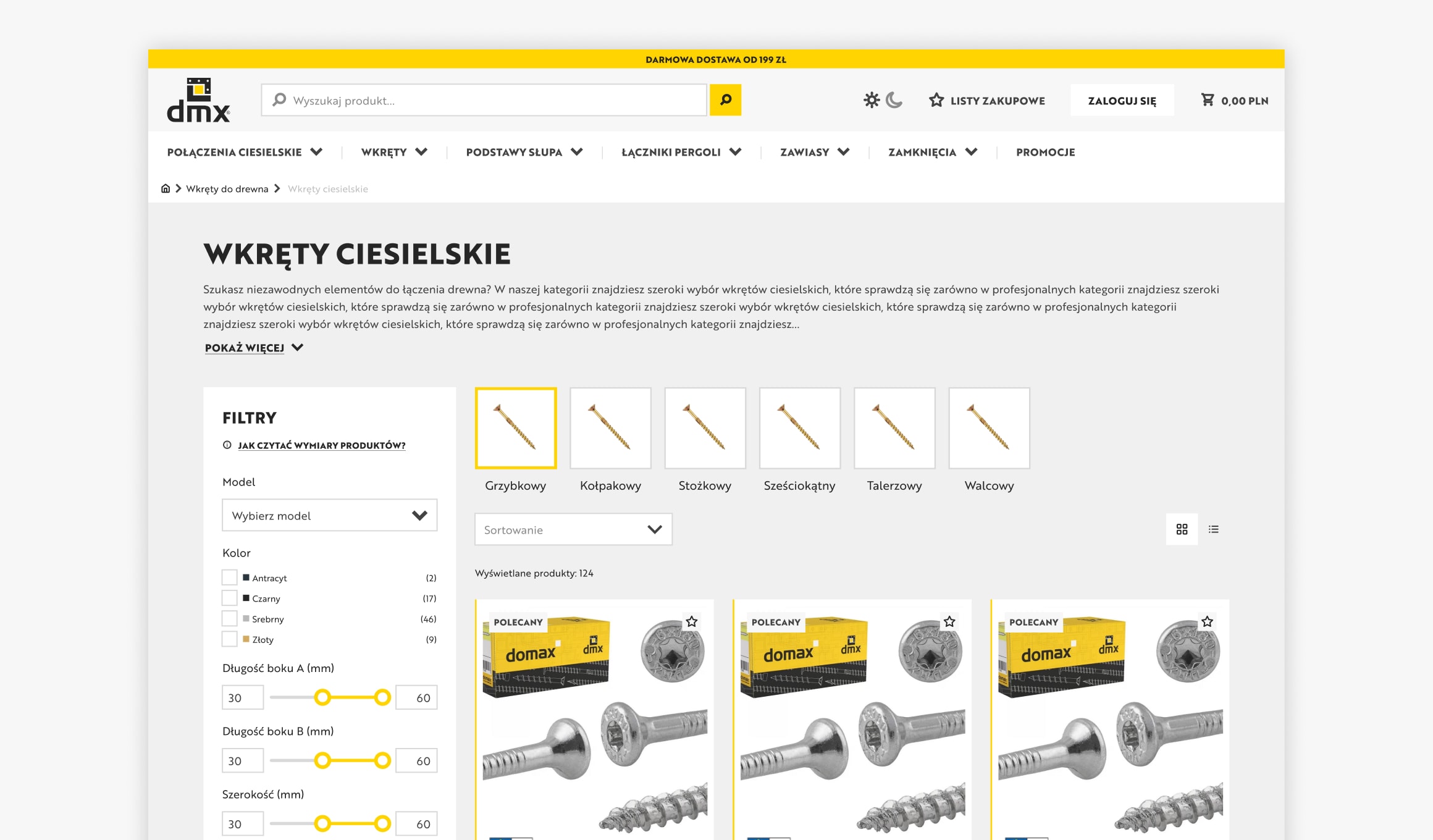
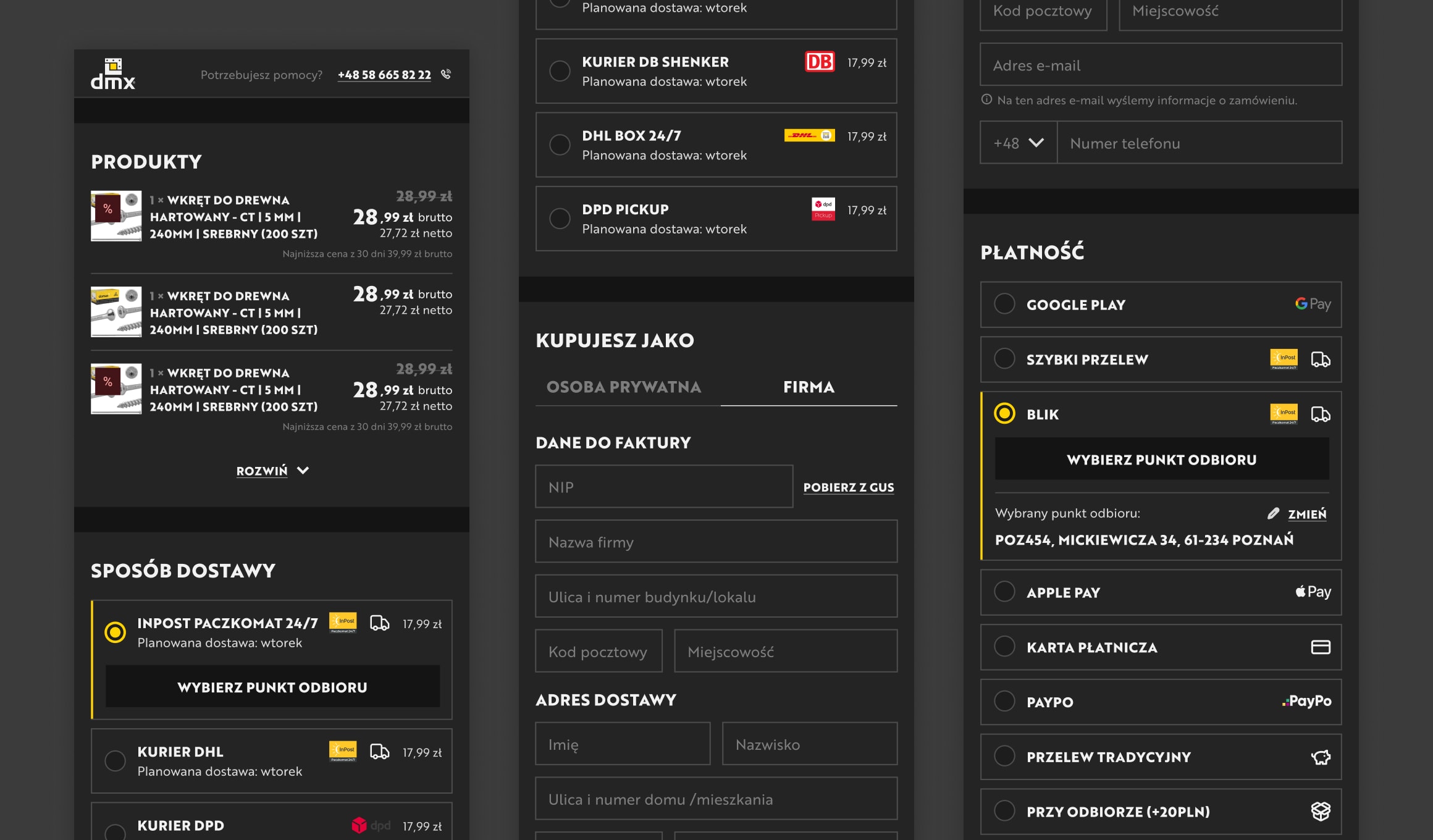
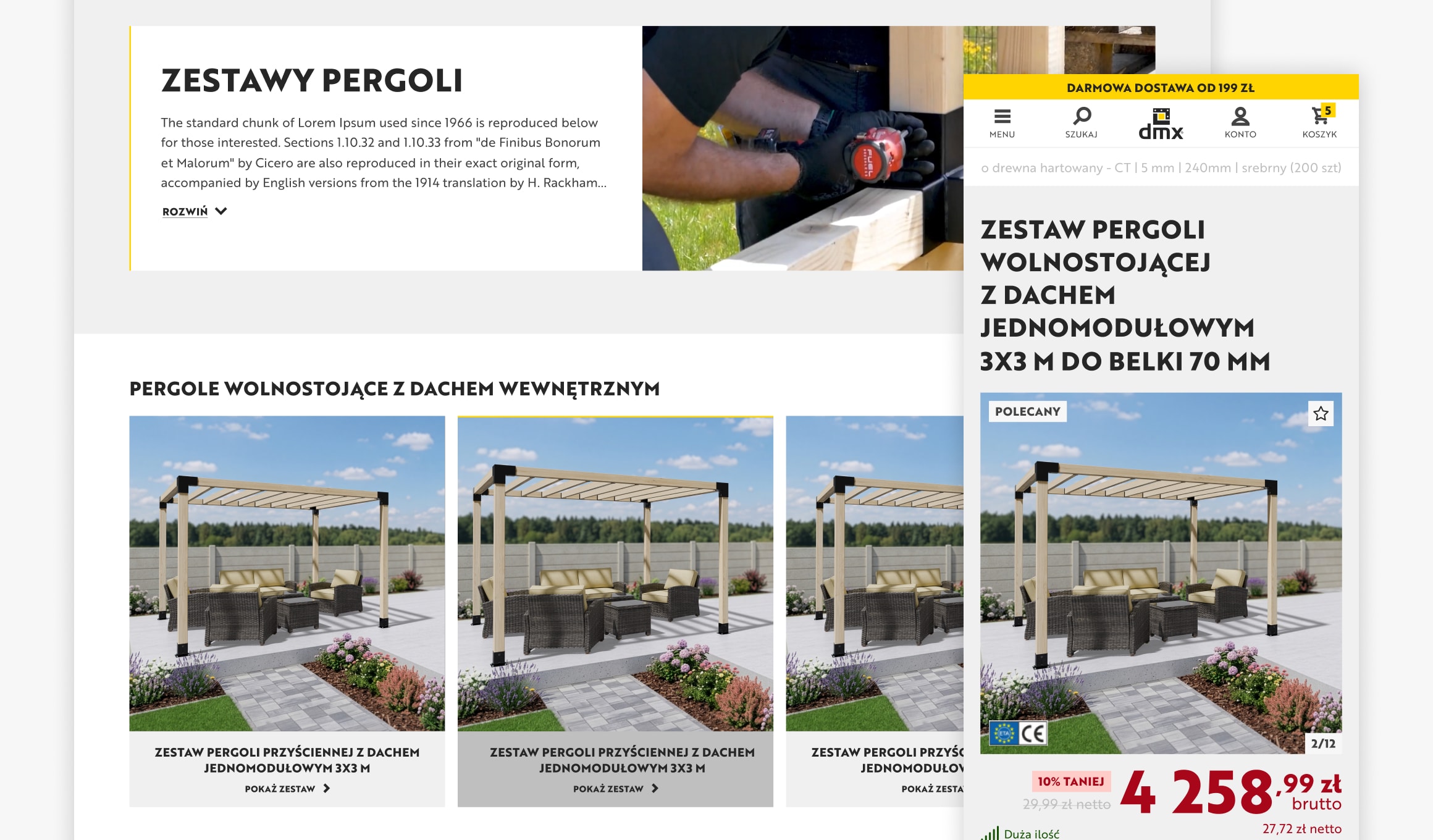
Industrial fixings come with a deep, branching catalogue. Anchors alone split into ground anchors, concrete anchors, bolt-down anchors and several more levels below that. To keep all of it findable we put Elasticsearch behind the search box, with a recommendation layer that points buyers toward the right product as they type. Dynamic filters narrow a long listing in seconds. For the trade we added quantity discounts that reward larger orders, along with product sets that bundle related items under their own pricing rules.
Shopping lists and one-click reordering for the people who come back every week
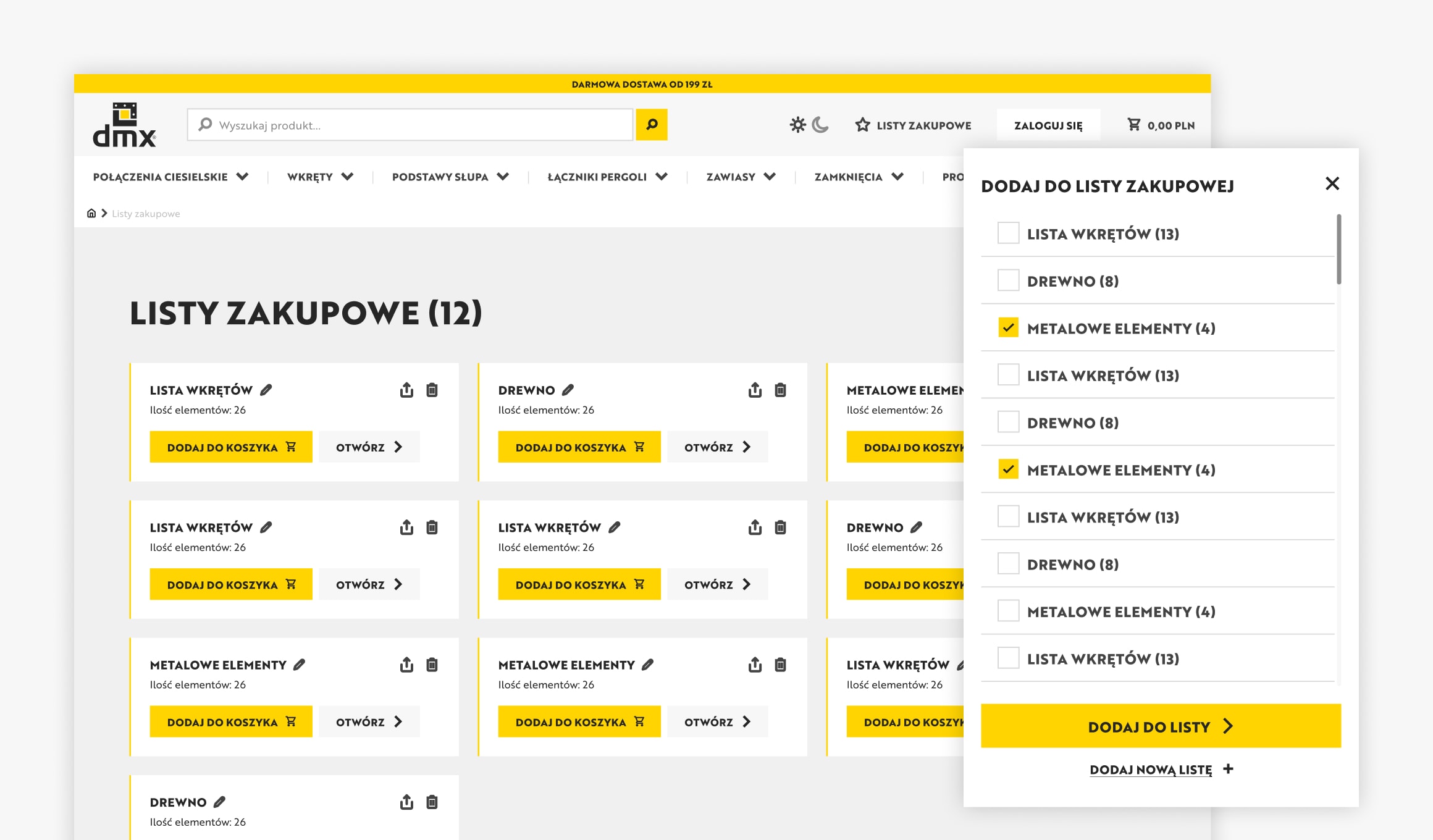
Trade customers rarely browse. They restock. So we built custom shopping lists they can create, edit and share with colleagues, then drop into the cart in a single move when it is time to order again. Past orders can be repeated the same way. The account area keeps company invoice details, addresses, orders and returns together in one place. The status of an order can even be checked without logging in at all.
We mapped Shopware's Shopping Experience straight into the Next.js storefront
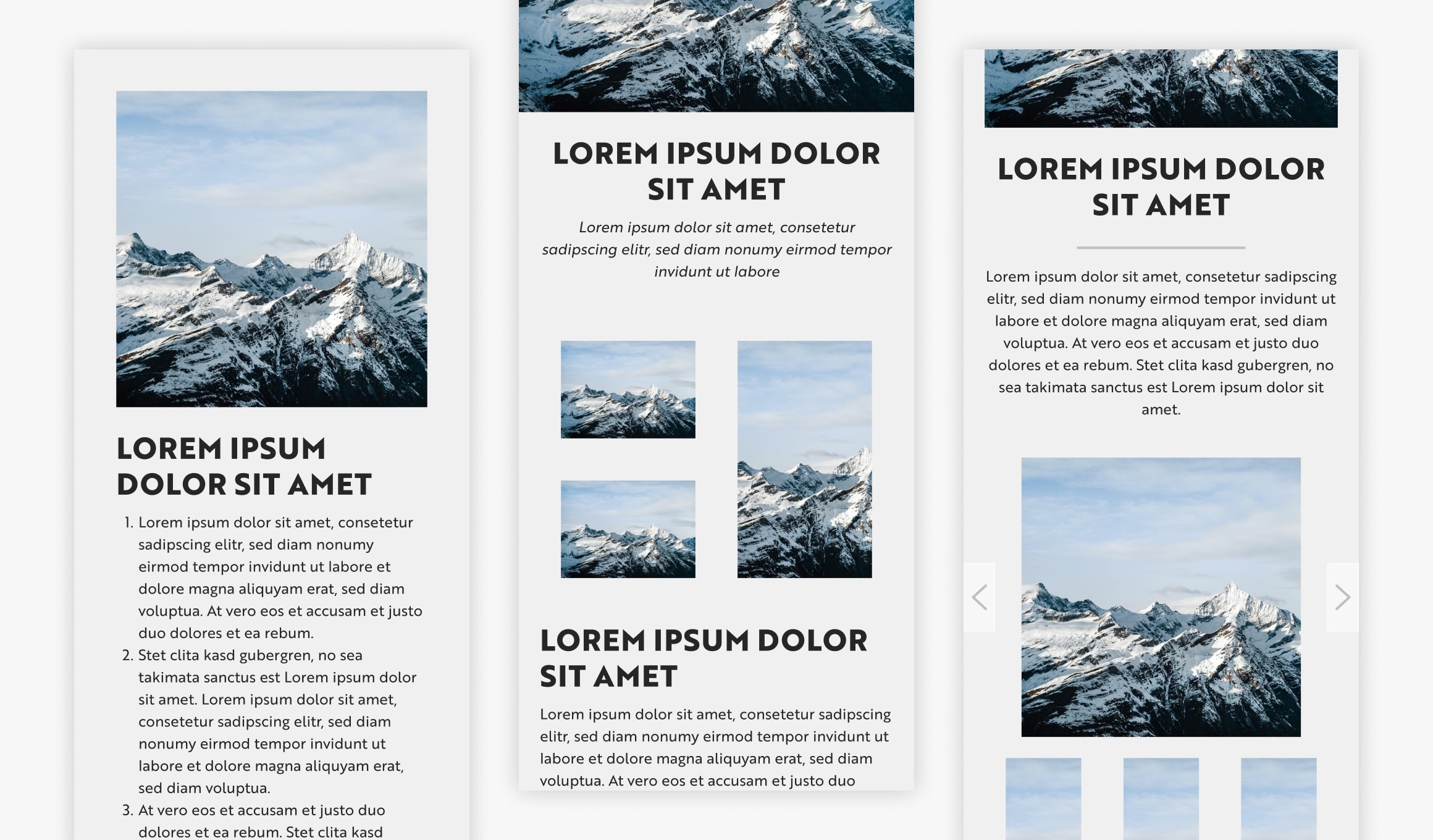
Shopware's Shopping Experience is its visual page builder, so we mapped each of its CMS components onto the Next.js side. A layout someone assembles in Shopware then renders on the storefront with no rewriting in between. Where the platform does not ship the block we needed, we built our own, adding custom components for the content patterns and page sections specific to DMX.
We plugged the store into the systems Domax already runs on
Orders flow straight into BaseLinker, the platform the business already runs fulfilment on. Invoices and their corrections are pulled back from there into the store. Brevo takes care of the newsletter and the transactional mail, while payments go through Tpay and PayU, with InPost Pay available for a faster checkout.
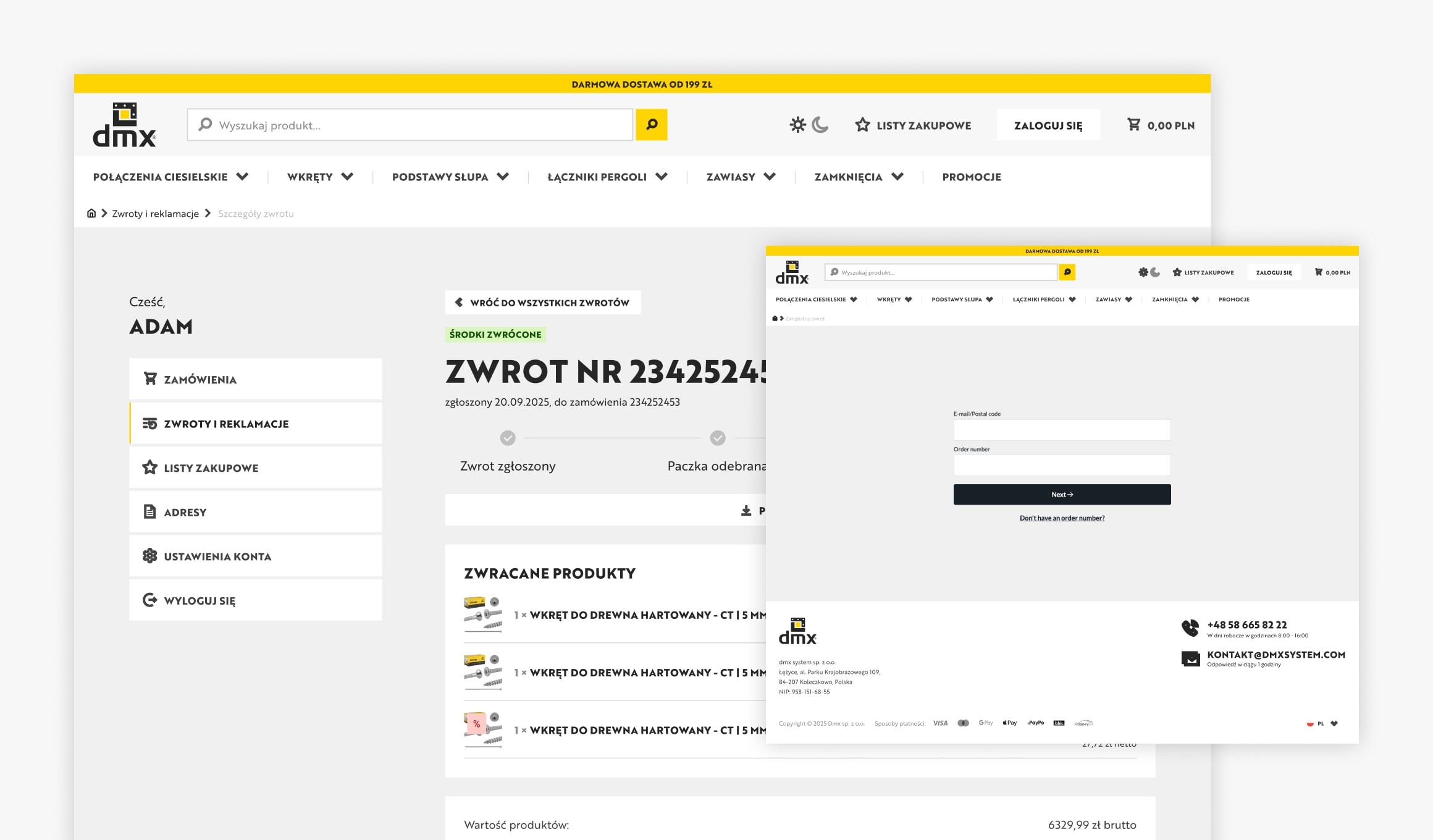
Every screen, from listing through to checkout, is drawn from the same set of components
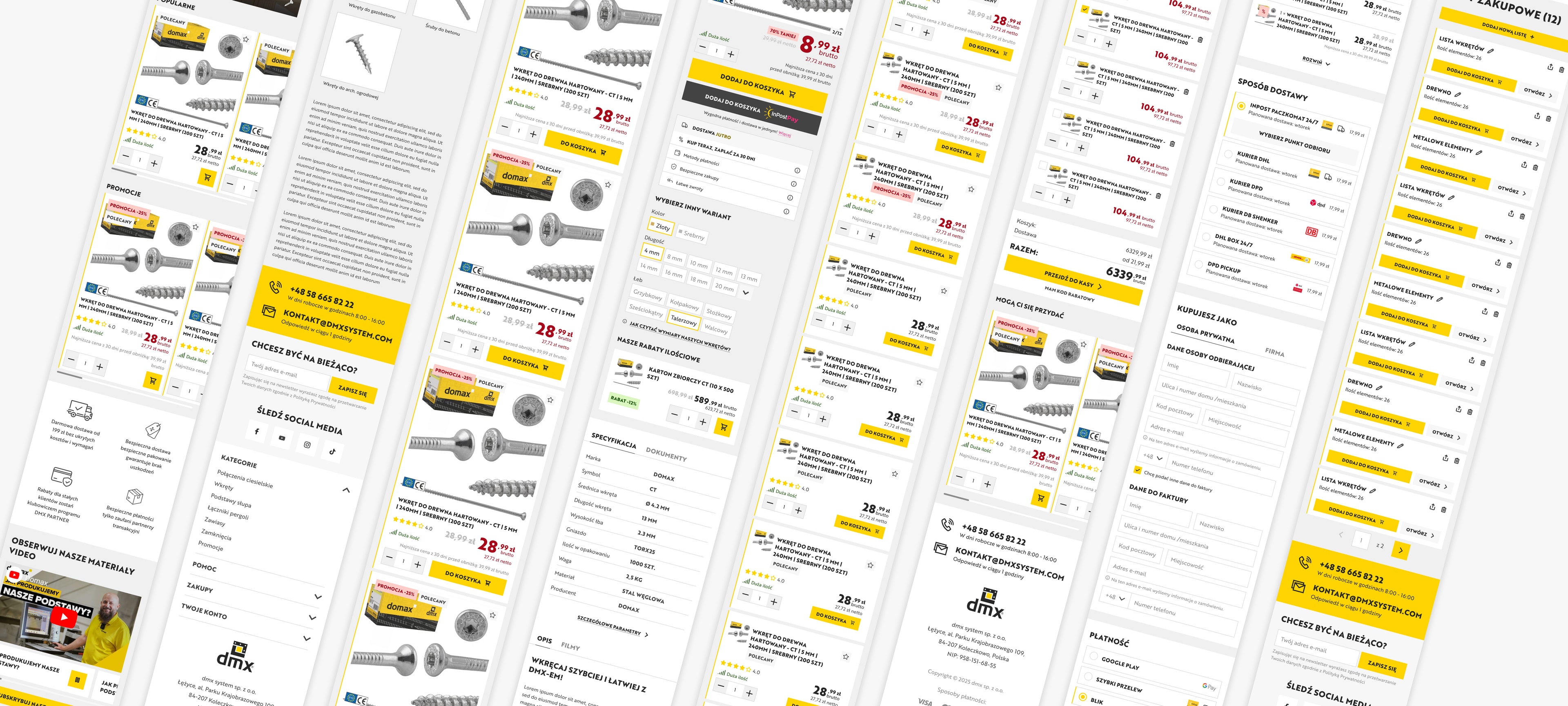
A contractor reordering the same fixings every week wants speed and clarity, while someone building their first pergola needs a little more guidance. We designed a single storefront that serves both, with net and gross prices shown side by side for the trade and a deep category tree that stays navigable for every visitor.
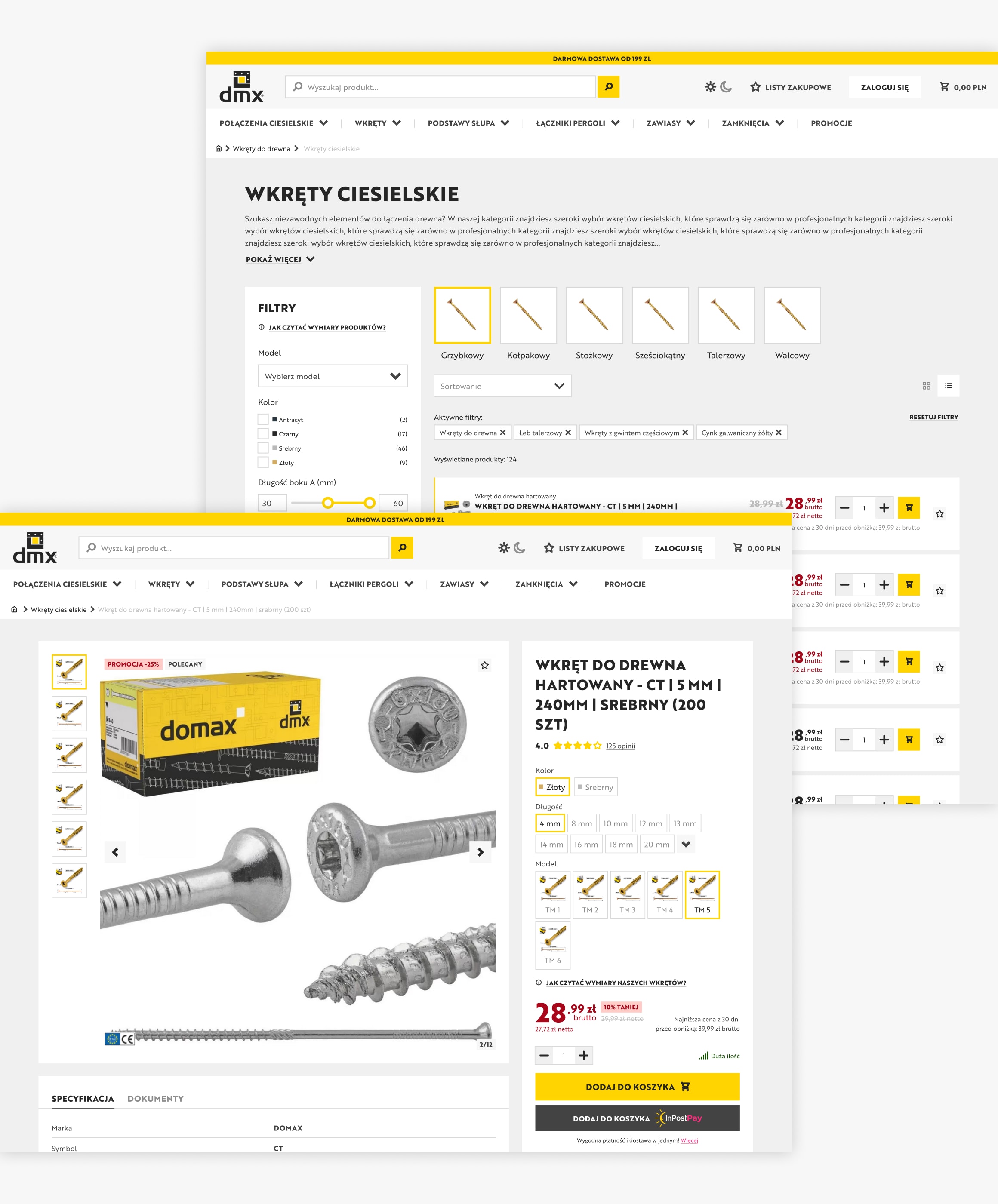
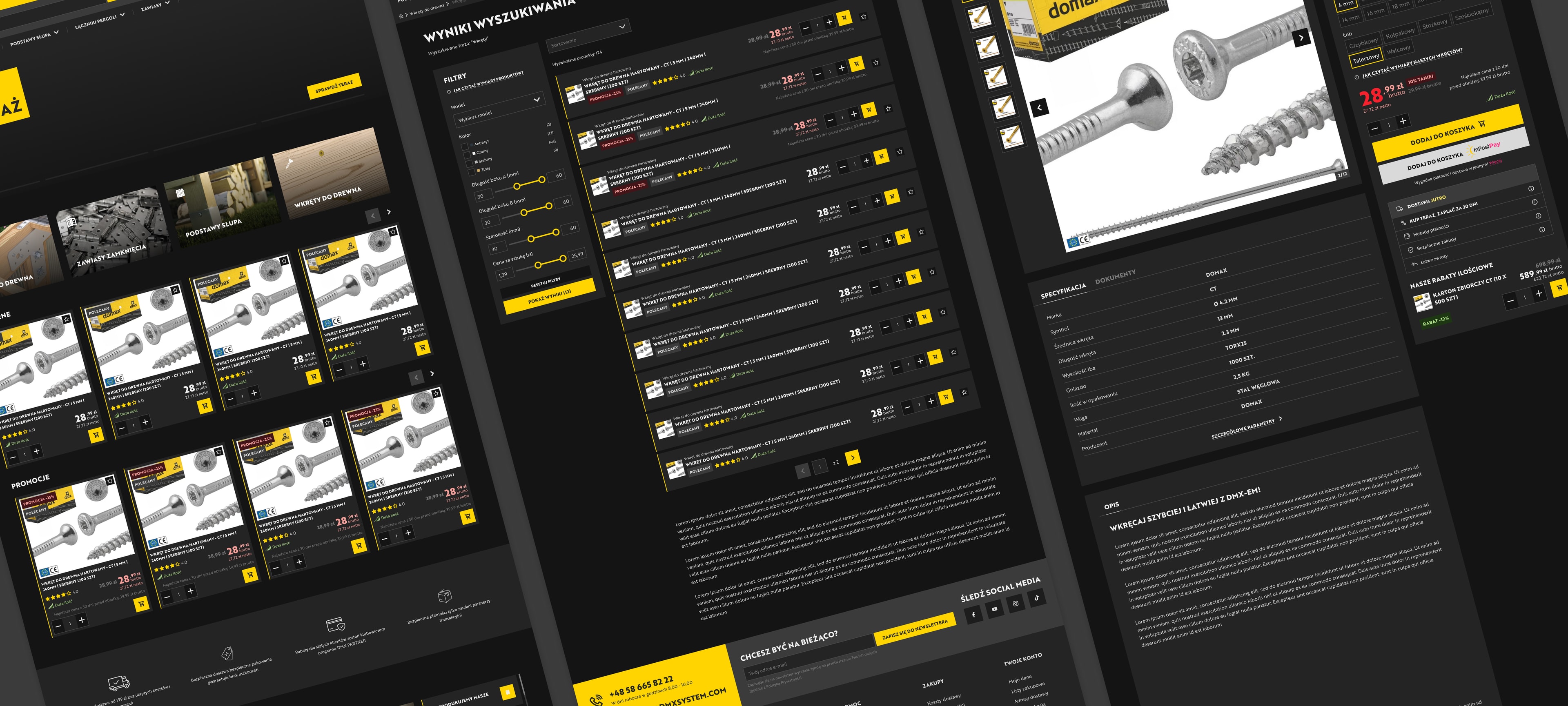
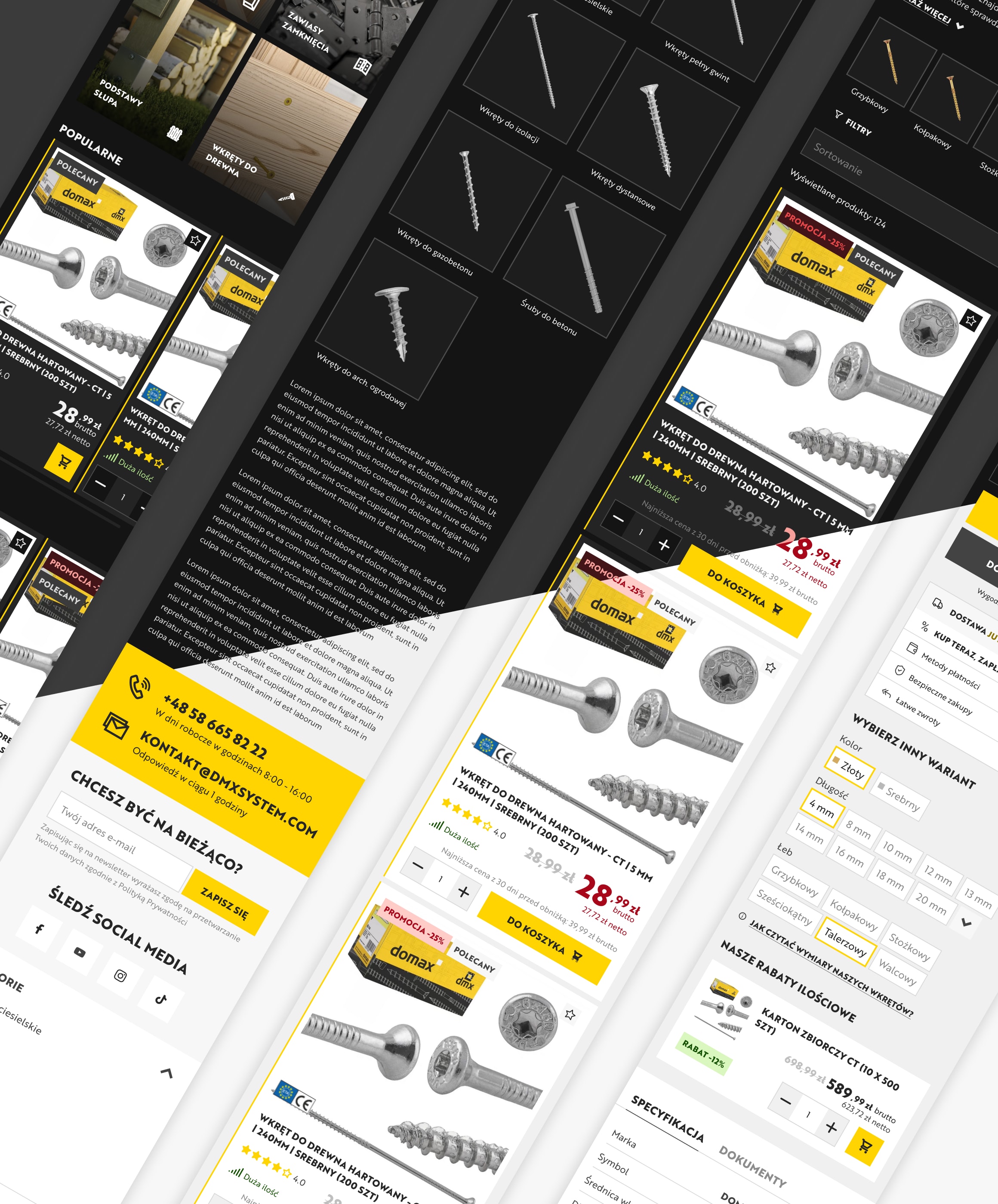
One interface that works for a pro buyer and a weekend builder
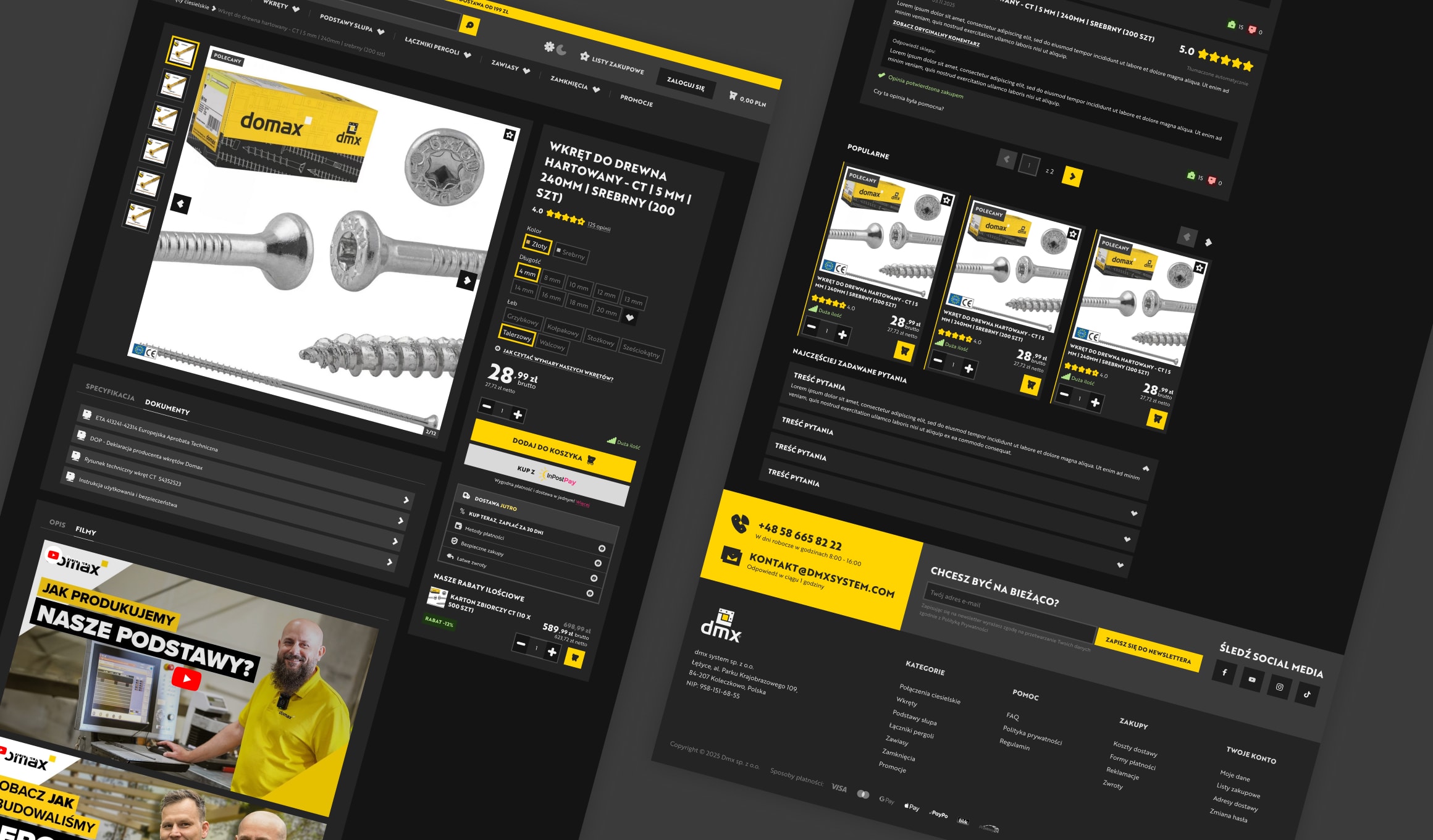
The design system carries the brand across light and dark themes. Every screen, from listing through to checkout, is drawn from the same set of components - so switching theme never means rebuilding a flow from scratch.
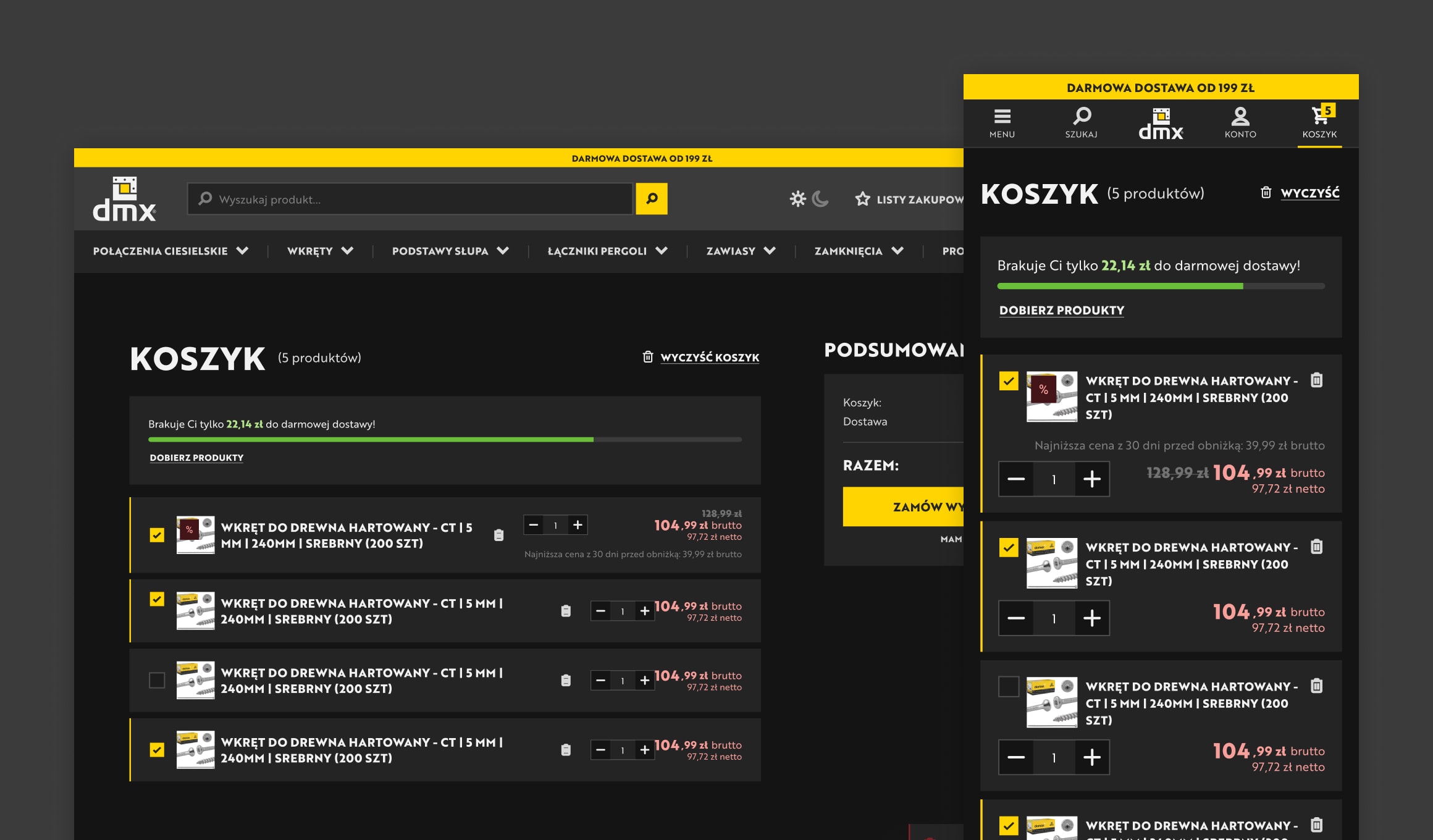
Migrating a manufacturer's catalogue without losing its search rankings
A producer with decades of history carries SEO equity it cannot afford to lose in a replatform, so we engineered for that from the outset. URLs were separated from product titles and H1s, which lets the team tune each of them without breaking the others. Discontinued products redirect on their own. A manual redirect module covers the cases that call for a human decision. Change a product's slug and its internal links update themselves. Structured data, a generated sitemap, canonical control and selective noindexing all shipped with the build, while ALT text is written automatically across a catalogue far too large to caption by hand.
We kept it fast with caching that knows when to refresh
Most visitors hit cached pages, so we built the performance layer around that from the start. Pages are served from cache through a Redis handler, while images come through Cloudflare CDN and are resized on the fly. The more interesting part was invalidation. We built a module on the Shopware side that tells the Next.js frontend exactly when a given page needs to refresh, so the cache stays warm. Elasticsearch keeps search fast across the full catalogue. The frontend ships as a standalone production build to keep its footprint lean. The result shows in the numbers across Core Web Vitals, PageSpeed and time to first byte on key templates.
Back-office tools for a catalogue that changes constantly
Prices on thousands of industrial SKUs change often, so they can be updated in bulk from an uploaded file rather than one product at a time. Every change to the catalogue is logged. The team can reorder products within a category by hand, import product parameters in bulk and manage the extra custom fields the range needs. Reviews and static content are translated for other languages, with rich-text fields handled on demand from a single button. Returns and complaints run through their own flow, while back-in-stock and review-invitation emails are sent automatically.
We built it this fast partly by using AI tools where they paid off
Six months is a tight window for developing e-commerce this large, so we leaned on AI tooling wherever it saved real time. In the design phase it cleared away the repetitive groundwork, which freed the team to spend its hours on the decisions that shaped the store. During development it took on the routine coding, the boilerplate and scaffolding that is more typing than thinking, so the developers could stay on the harder logic. The content stage gained the most: a hardware catalogue runs to thousands of product descriptions, parameters and translations. AI helped us generate and process that volume far faster than hand-work ever could. None of it replaced judgement. It simply cleared the path, so a tight deadline stayed within reach.
Launch
We delivered DMX System between January and June 2026. Since launch we have stayed on as Domax's project and technology partner, sharpening what is there and adding to it as the business grows. The headless setup keeps that steady stream of work easy to ship, because the frontend and the commerce core can each change on their own schedule.
Outcome
DMX System gave Domax a direct sales channel of its own and a partner that keeps building on it.
See it live
Let's talk about your project idea!
Tell us about your project. We’ll help you plan the architecture, scope, and execution.
© Webalize 2026