Back
Re-platforming & rebranding a high-traffic DTC fashion e-commerce store
Project goal
To get MyBasic off a platform that was holding the business back and onto a faster headless stack built to last, then to stay on as a long-term partner developing the store right up to a complete rebrand.
Our scope
UX/UI design
Headless e-commerce development
Systems integration
Ongoing product development
UX/UI redesign implementation
Project duration
Partnership since 2021
Technologies used
Shopware 6
Next.js
React.js
TypeScript
PHP 8
Client
MyBasic
Phase 1 of 2
MyBasic came to us with a store that had stopped keeping up
The brand used PrestaShop, betting that its big library of ready-made modules would let them build faster. It went the other way. So much of the store had been customised that every module needed checking and reworking before it would behave - often taking longer than writing the feature from scratch. A year later the things the team actually wanted were still sitting in the backlog while the same basic bugs kept resurfacing.
Frontend actions felt slow, a problem that bit hardest on mobile - the source of roughly 80% of visits and 60% of sales. Spending more on the old setup just meant more technical debt for an engine they already knew they wanted to leave.
The solution
We moved MyBasic to a headless build - Shopware 6 behind it, Next.js in front
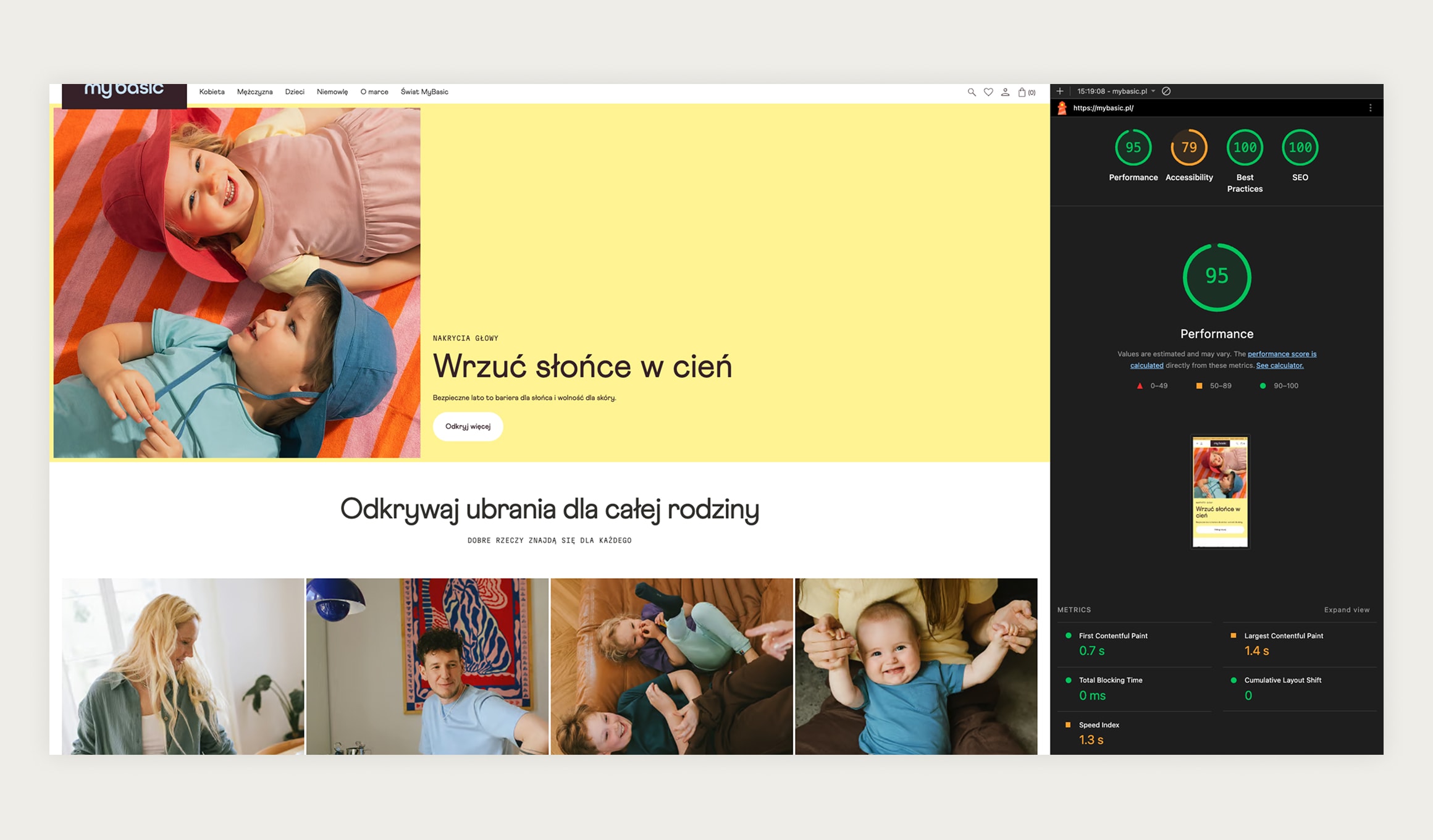
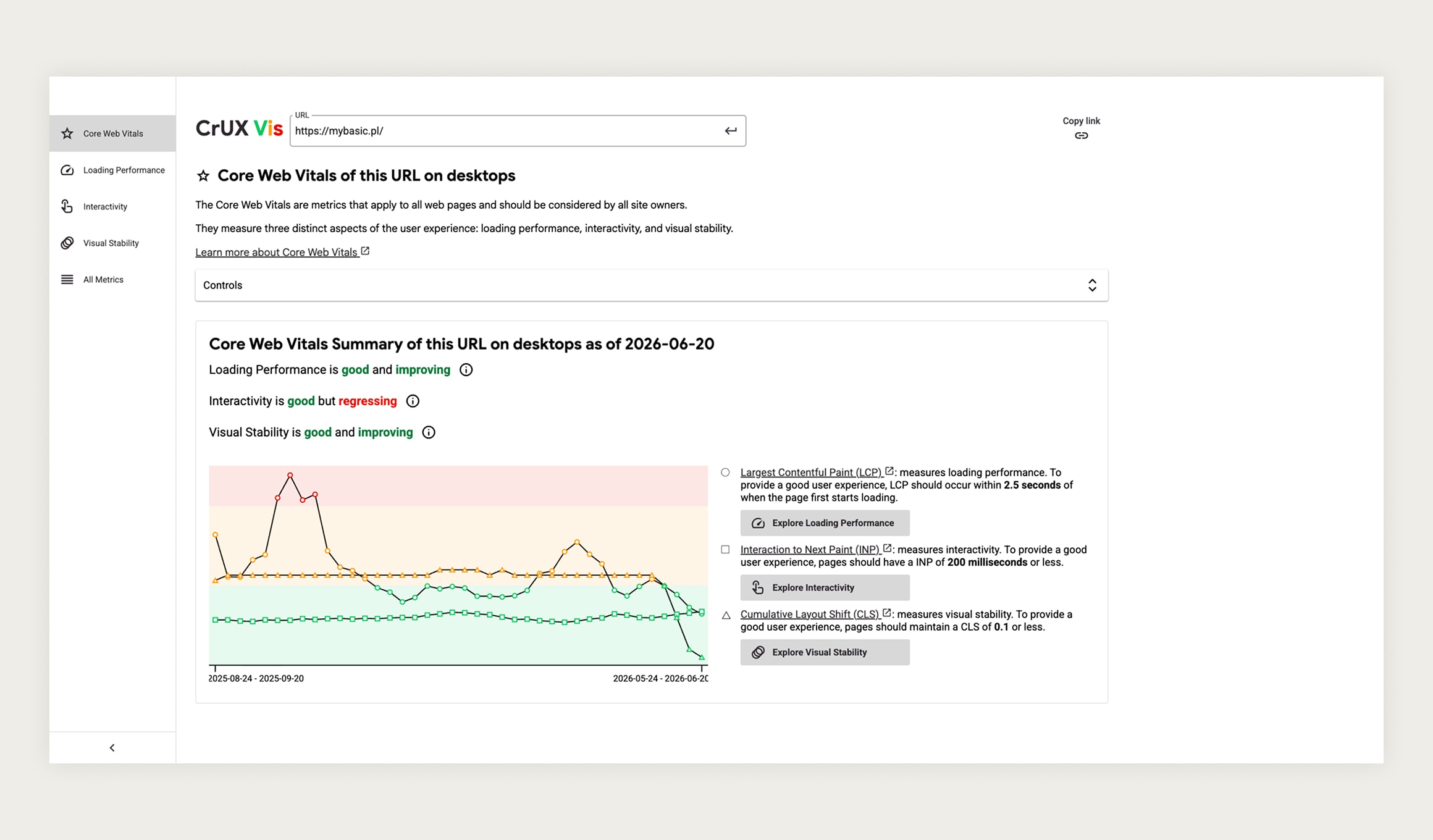
Splitting the storefront from the commerce engine fixed both problems in one move. The Next.js frontend could be built for mobile first and tuned hard for speed. Behind it sat Shopware 6, a commerce core the business could grow into. With room to bolt on an ERP, open up fresh sales channels and move into new markets whenever the brand is ready. We set the bar on day one: clear Core Web Vitals and hit 80+ on PageSpeed across mobile and desktop.
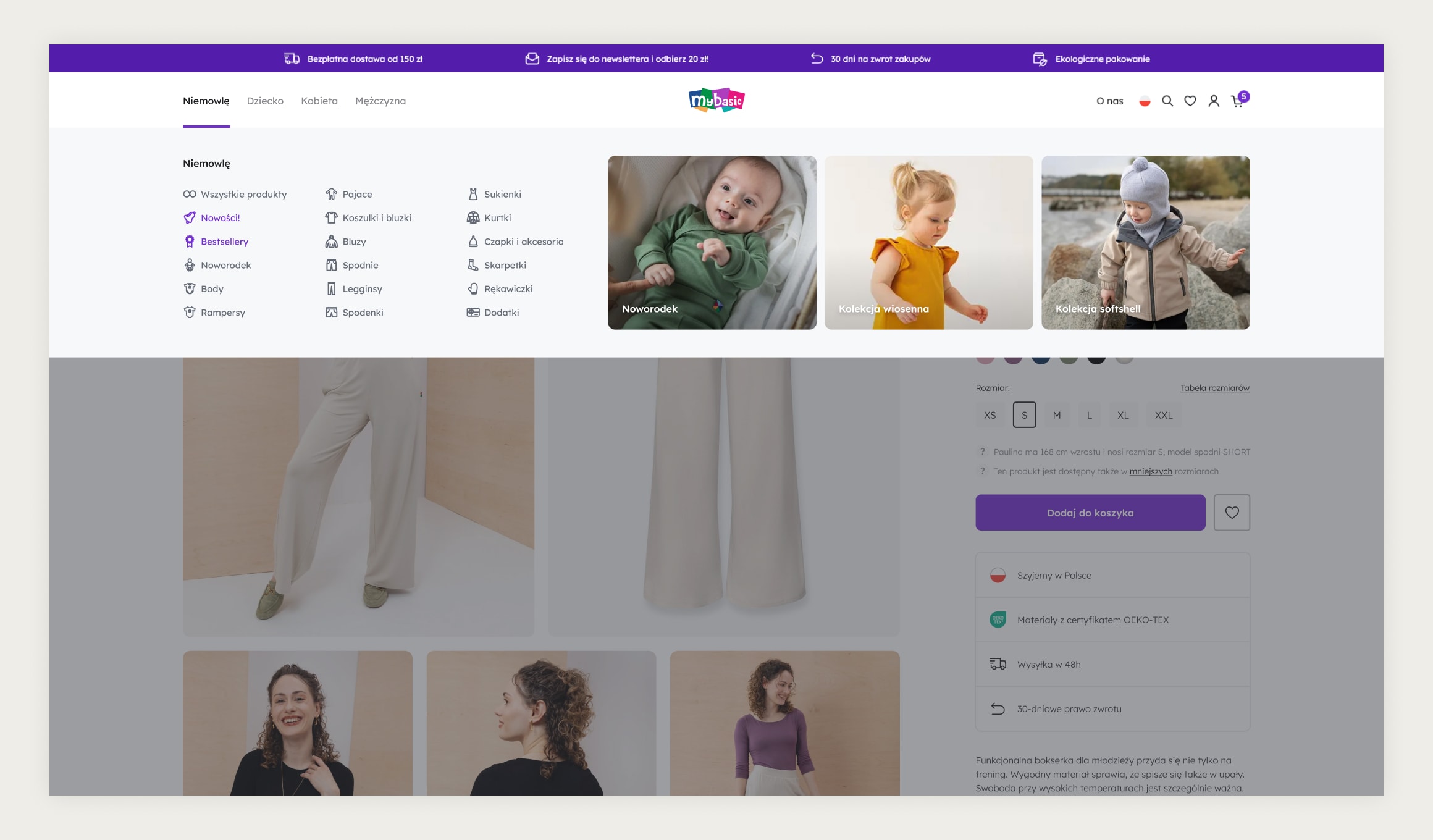
A catalogue of 14,000 SKUs needed a data model to match
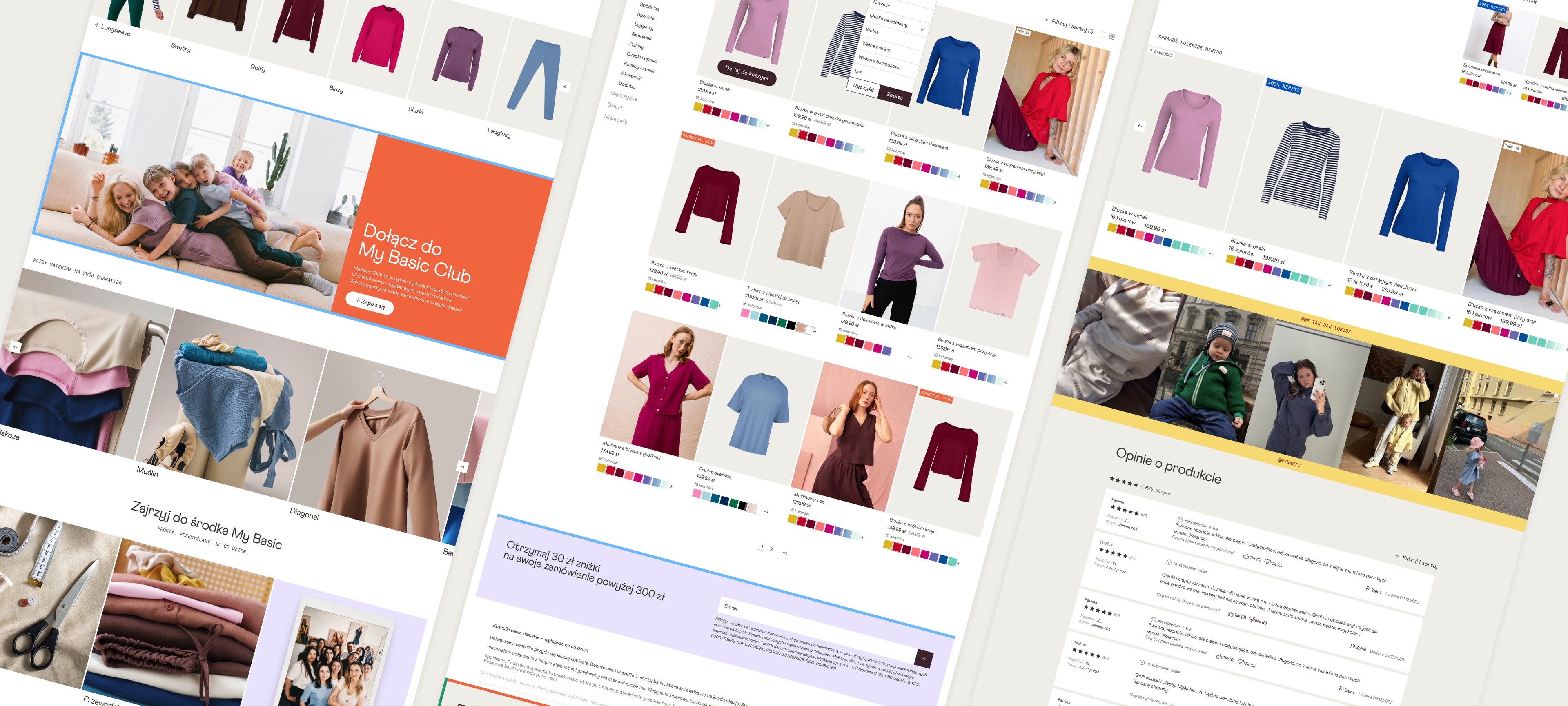
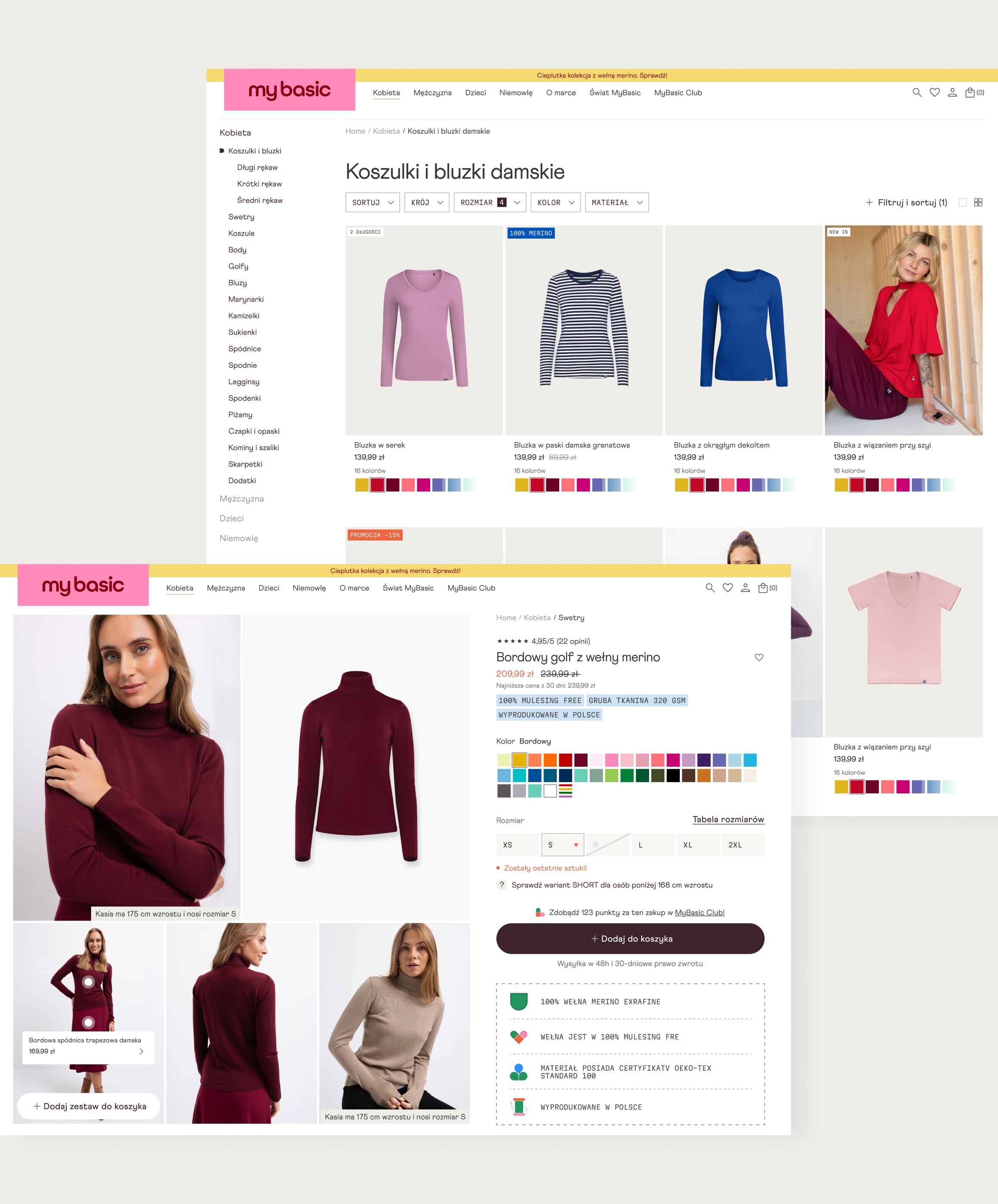
MyBasic sells basics for the whole family: plain colours, no prints, sewn in Poland from certified materials and kept in stock year-round. That plainness hides a surprisingly large catalogue - around 220 models fanning out into roughly 3,300 model-colours and about 14,000 individual SKUs. We built the data model on the brand's own logic: model, then model-colour, then index. A category page shows one entry per model with colour swatches underneath. Each colour variant gets its own clean URL for SEO. Shades close enough to be mistaken for one another can be grouped into a single filter. Customers get a catalogue that's quick to browse. The team gets one that's quick to manage.
Integrations & back office
We wired the store into the systems that run the business day to day, and built a back office that fits how the team really works.
Fulfilment runs through Omnipack. Invoices come from Fakturownia. Payments go through PayU and PayPal. GetResponse (Klaviyo in phase 1) drives marketing automation; EmailLabs sends transactional mail. GA4, GTM and Meta Conversions API sit alongside feeds for Google Merchant Center and Facebook. mybasic.pl and mybasic.eu run from one CMS - currencies, taxes, translations and shipping rules per market, all in a single place.
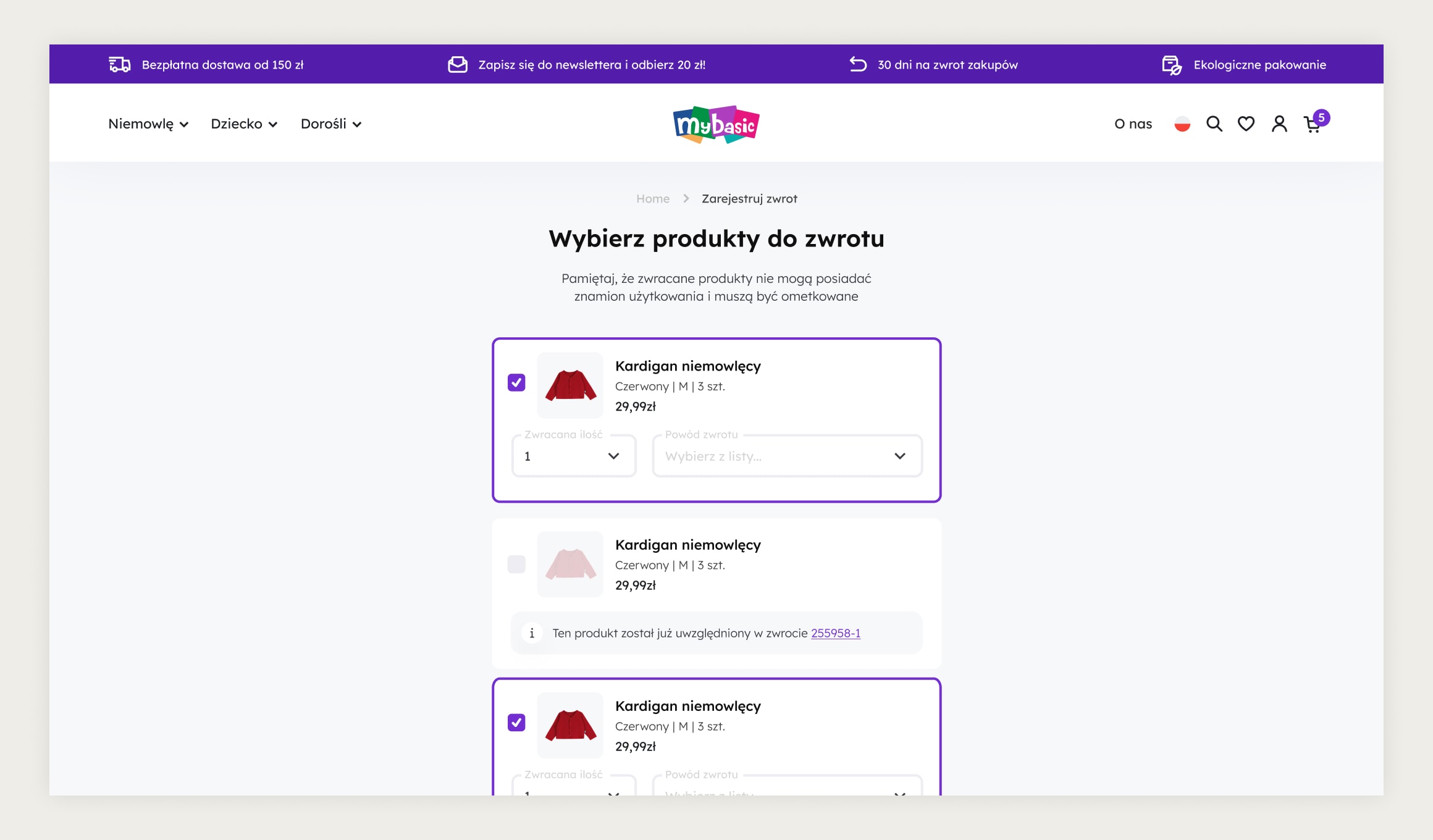
Too much used to happen by hand in Excel. Status changes can now be made in bulk from the order list. Staff edit orders, raise them from the CMS and read a full audit trail. Returns are paperless through InPost Szybkie Zwroty. On top sit the loyalty scheme, a flexible promotions engine, CSV stock imports and a no-code editor for landing pages, blog and banners.
Launch
MyBasic went live on the new stack in early 2023. We held on to the existing URL structure, migrated customer accounts with full order and return history, and brought across products, the blog and static pages.
Continuous improvement
Phase 2 of 2
In 2026, MyBasic decided to reinvent its visual identity
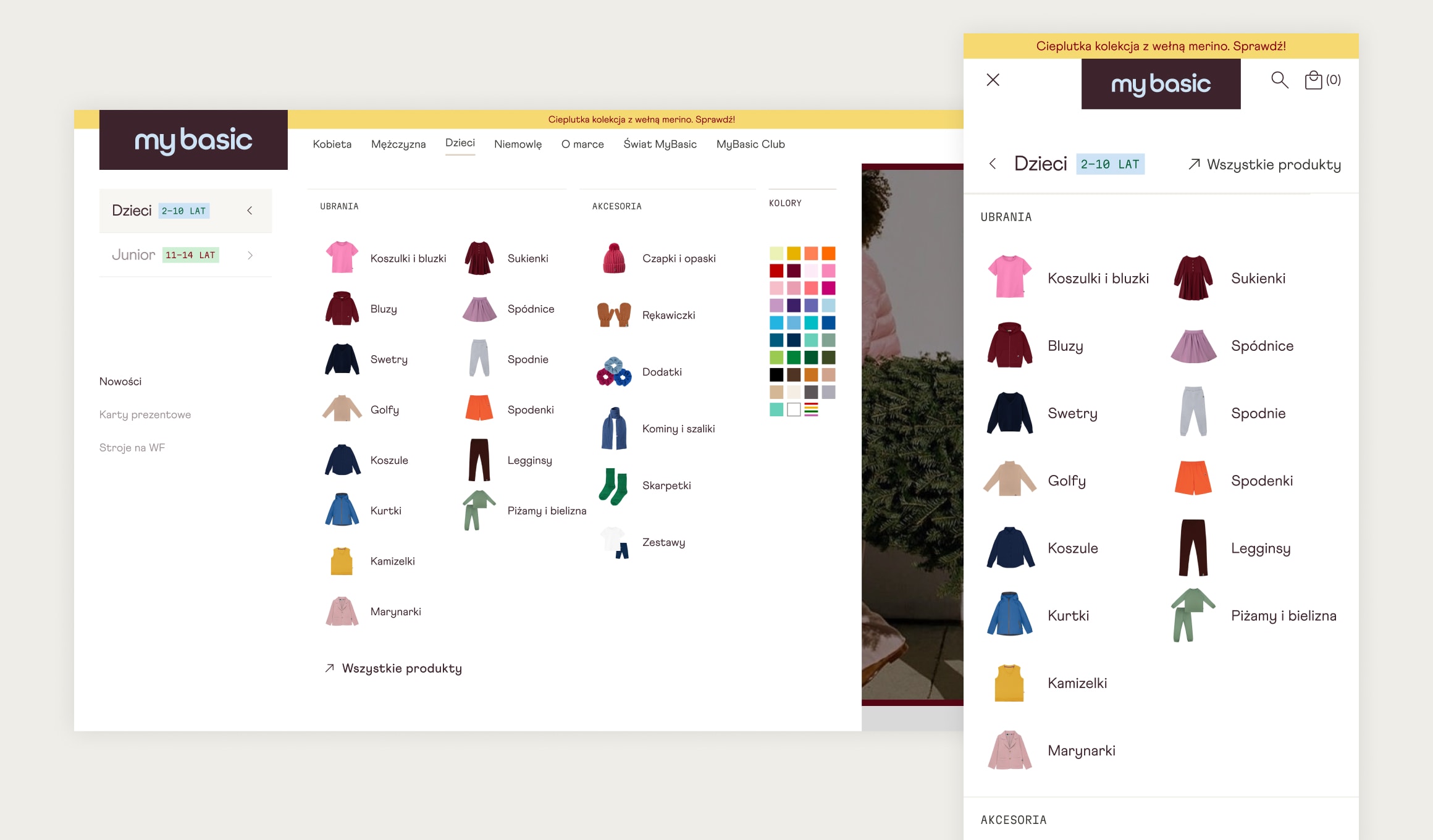
Launch wasn't the finish line - we've kept refining the store since go-live, guided by feedback from a large and loyal customer base. The headless setup keeps that affordable: frontend changes don't disturb the commerce core, and vice versa. When the rebrand brief landed, FellowHeads agency designed a new brand identity and UX from the ground up. Our part was to stand up a brand-new storefront, new features included, in roughly three months.
We shipped a brand-new storefront in about three months
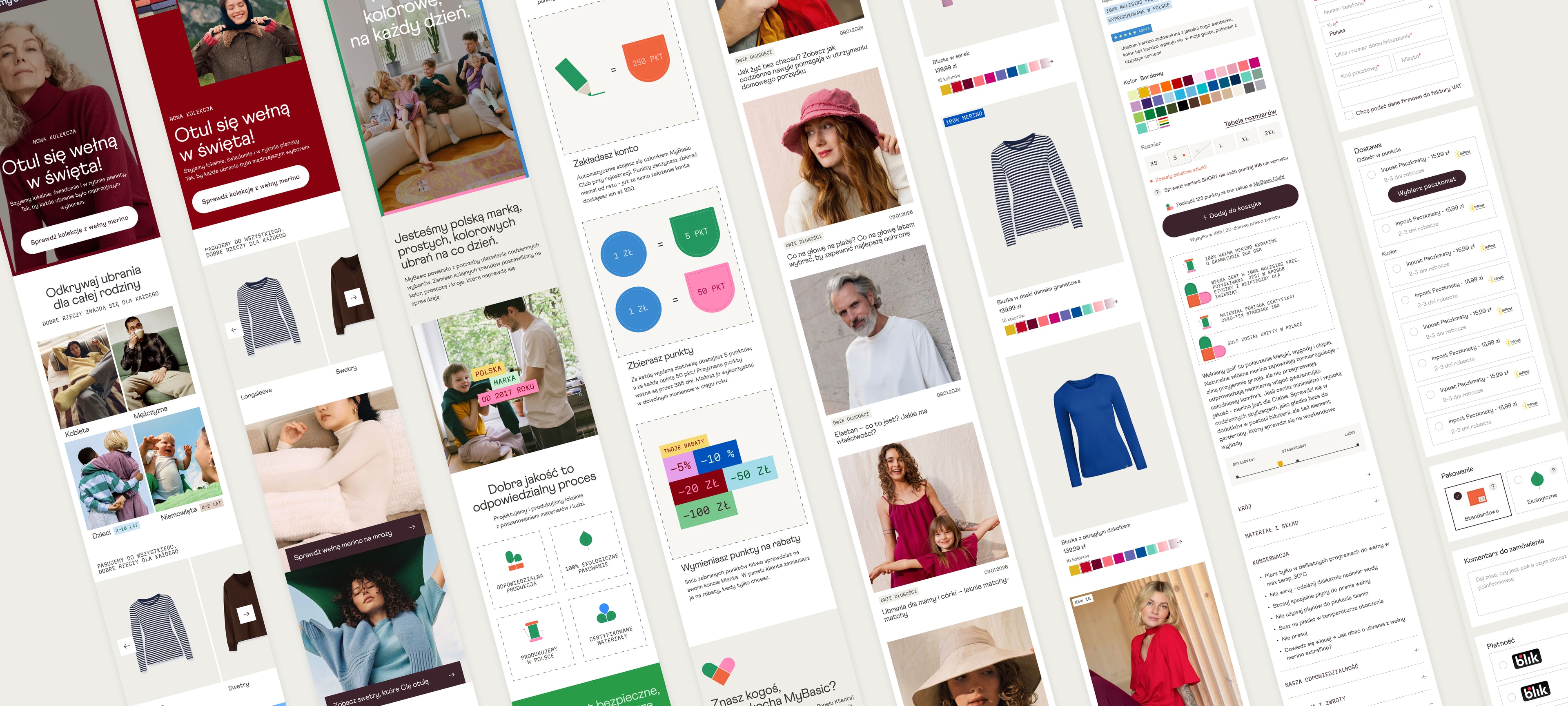
The modular architecture from phase one earned its keep. Because the commerce core could stay put, we rebuilt the whole customer-facing layer on FellowHeads' new look without slowing down. The storefront leads with colour - fitting a brand whose whole point is plain clothes in shades people enjoy. MyBasic Club got a rework. The brand story moved to the front: Polish-made clothing in certified materials, cut for the whole family.
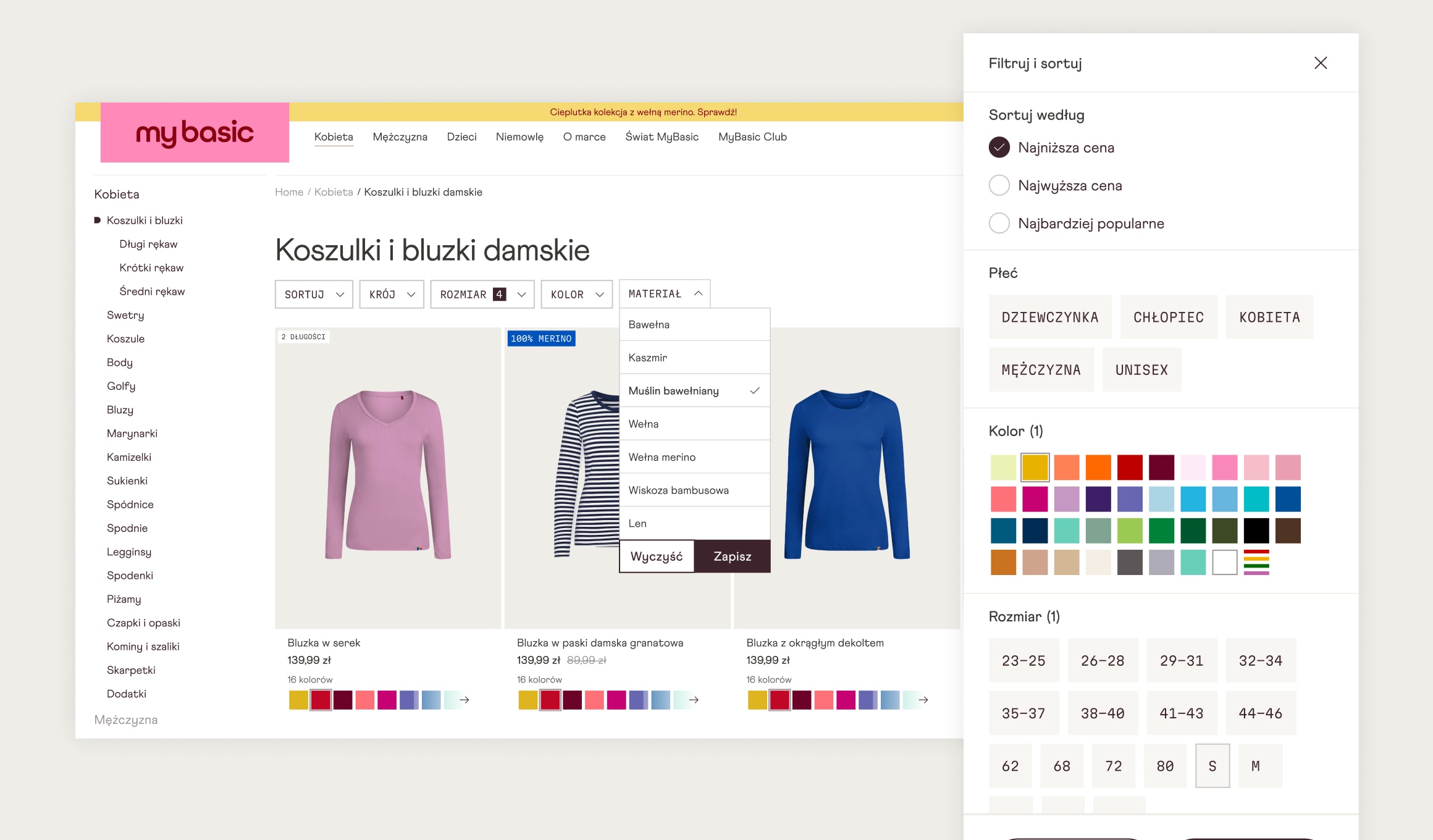
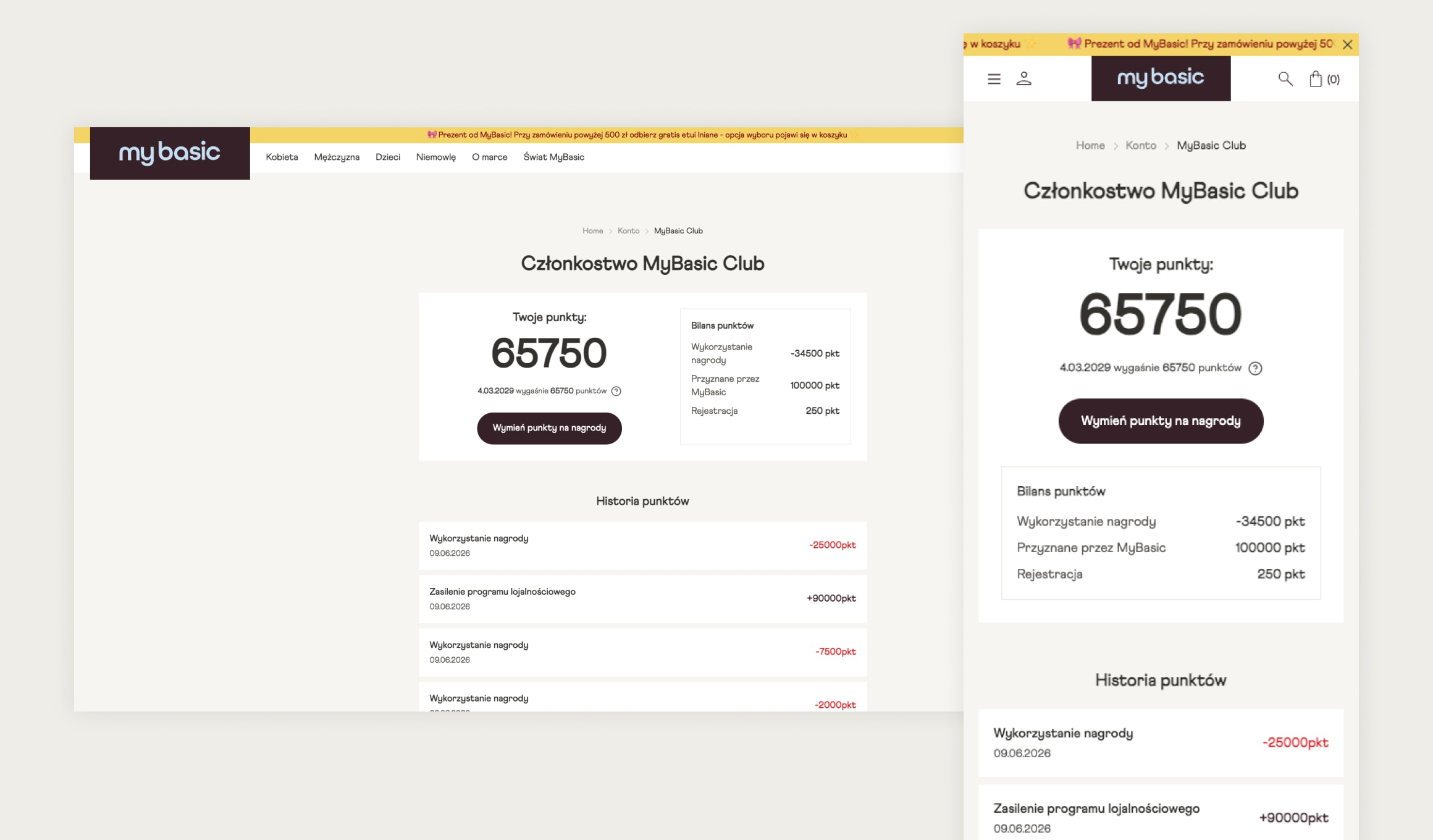
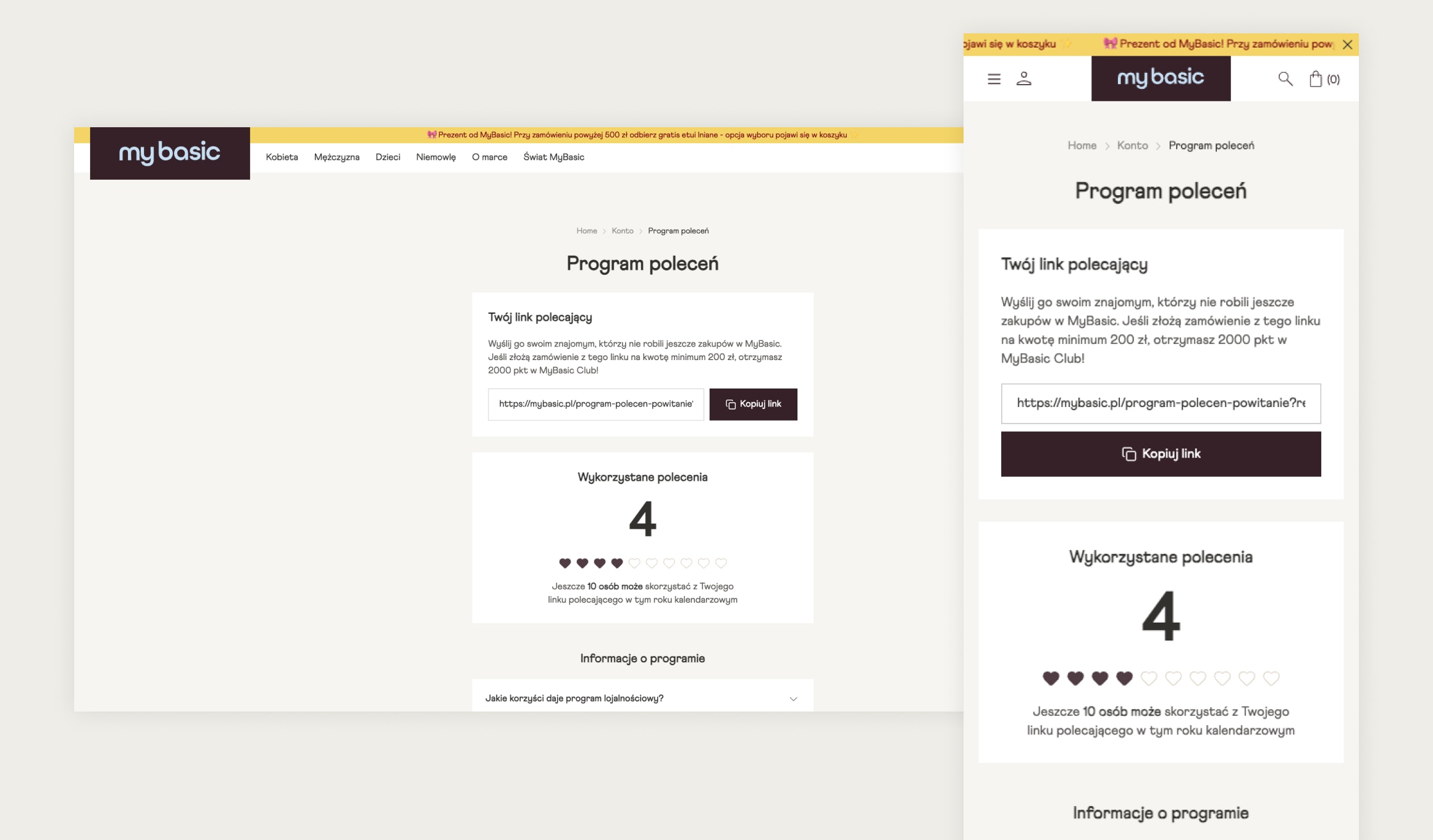
Loyalty, referrals and the features that keep customers coming back
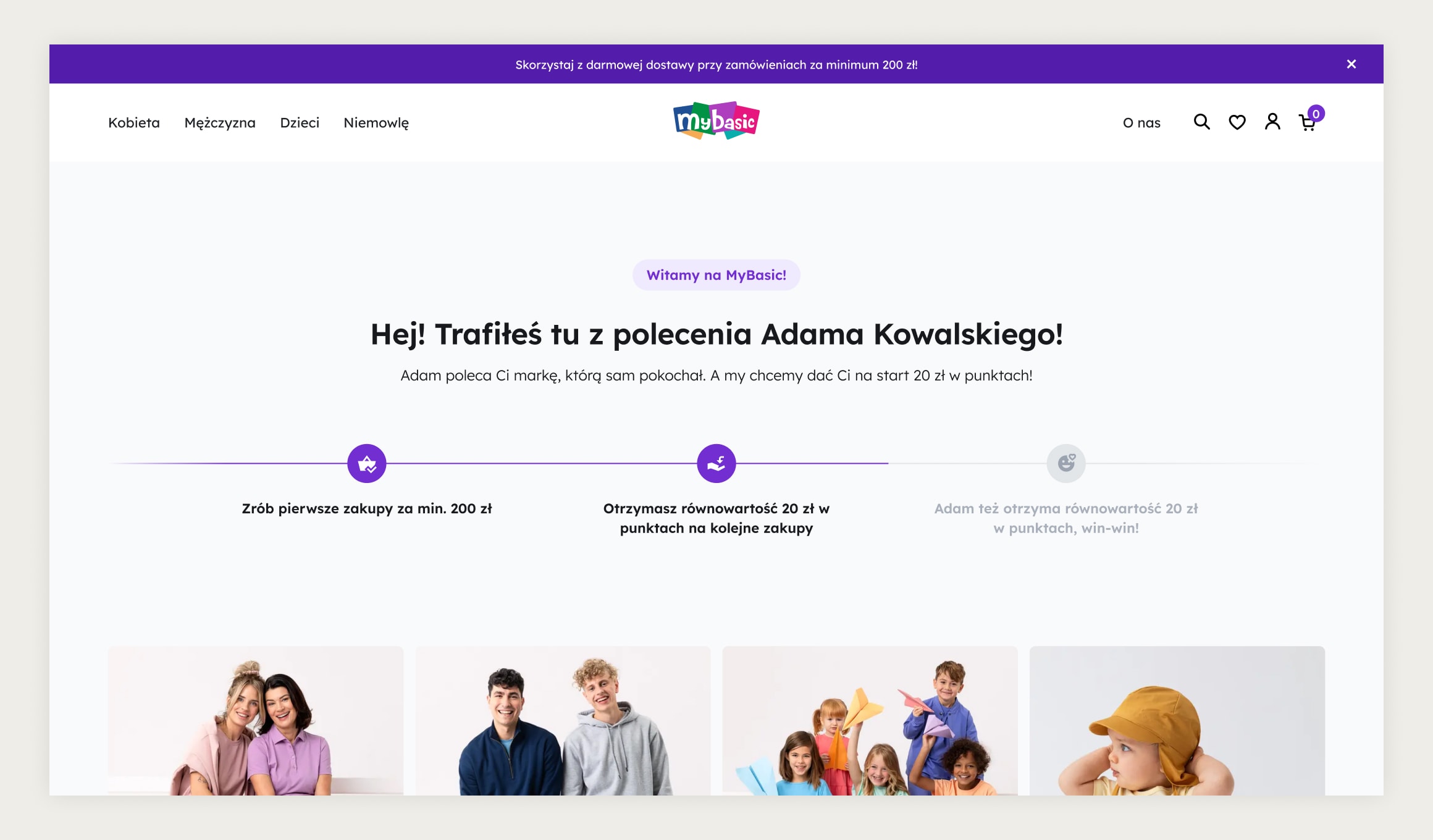
The rebrand wasn't skin-deep. MyBasic Club got a full redesign - points balance, redemption and transaction history on desktop and mobile. The referral programme was rebuilt too, with a cleaner link-sharing flow and a dashboard that shows how many invites are left in the year.
We put the storefront on Next.js 16, with Cache Components and partial prerendering switched on
Next.js 16 had just landed a new rendering model as we started the rebuild. Cache Components let us spell out exactly what gets cached and what doesn't - the page shell and catalogue data are prerendered; anything tied to the individual shopper streams in on top. Partial prerendering stitches the two halves onto a single page, so the browser gets a finished static shell almost straight away. The gain landed where it matters most for a mobile-heavy store: time to first byte and first contentful paint both came down.
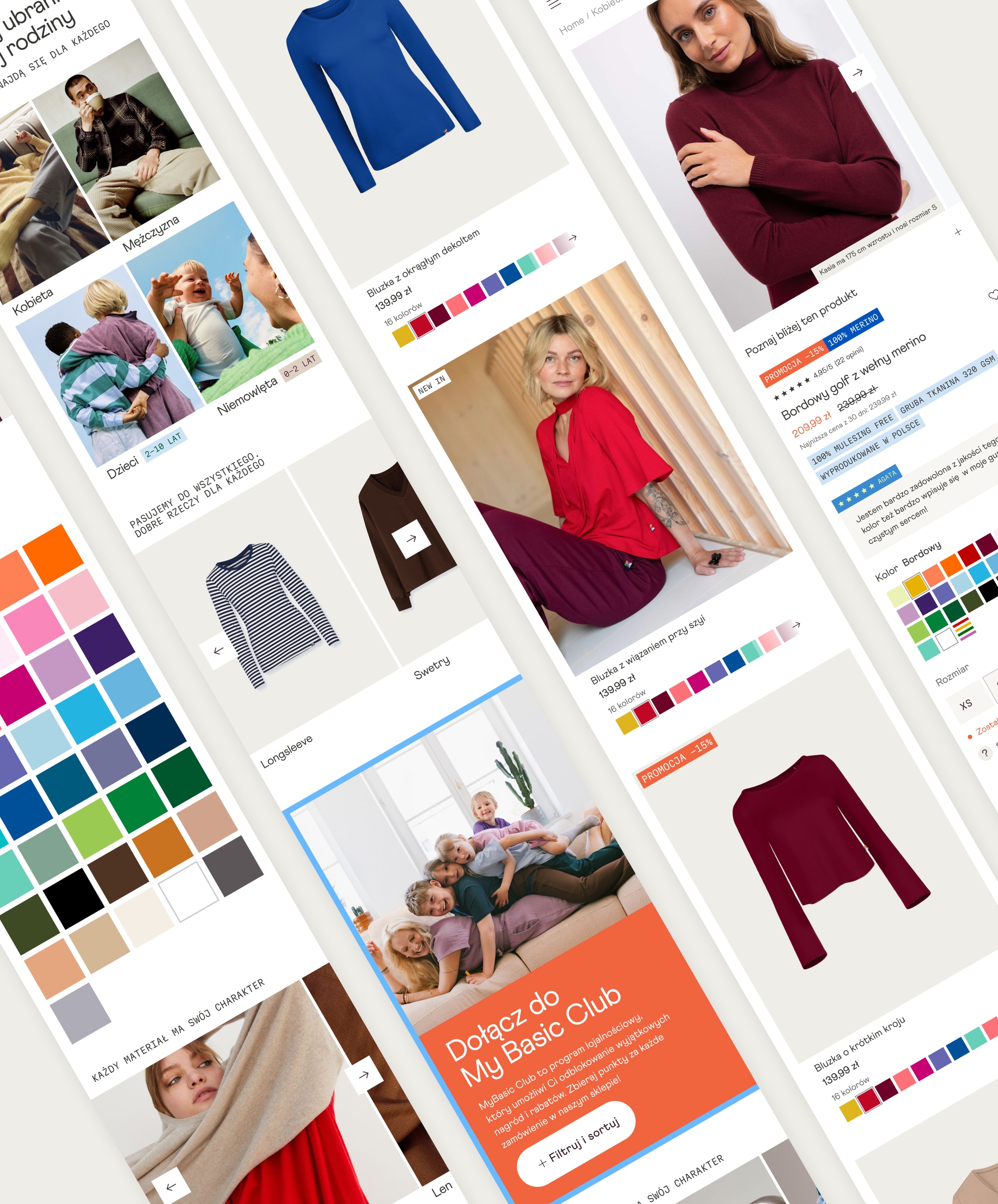
We rebuilt the storefront around mobile and it shows in the speed
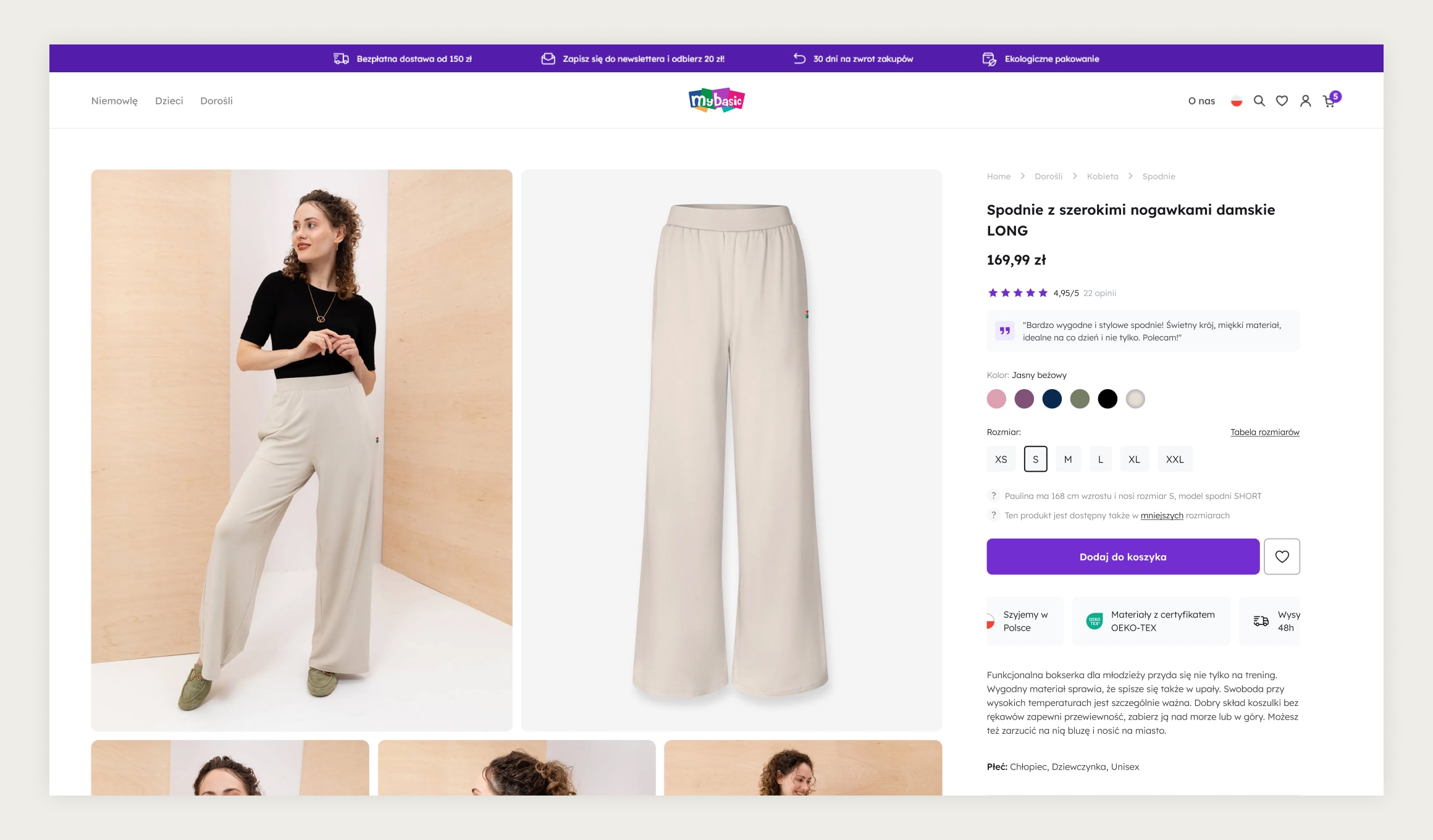
With most of the revenue coming from phones, the small interactions had to feel instant. Filtering a category is quick. Hovering a product swaps in a second photo. One fix matters more than it looks: when a shopper switches colour, we keep the size they'd picked - cutting returns and support tickets from parents buying the same item in several colours. Images are served through Cloudflare Images Transform service, rendered at a size that suits the device, then loaded lazily. Stock status, model measurements, size charts and fabric composition sit right where shoppers are looking.
Outcome
From a legacy platform that boxed them in, to a fast and fully rebranded store - with a partnership that's still going.
See it live
Let's talk about your project idea!
Tell us about your project. We’ll help you plan the architecture, scope, and execution.
© Webalize 2026