Back
A map-based booking platform for vehicle inspection stations
Project goal
To make booking a vehicle inspection simple on both sides: a map-led way for drivers to find a station with a slot that suits them, plus the tools station owners need to fill their calendars.
Our scope
Brand design
UX/UI design
Web development
Technologies used
Next.js
TypeScript
Prisma
PostgreSQL
Vercel
Client
Jadę na przegląd
We built the brand from a blank page
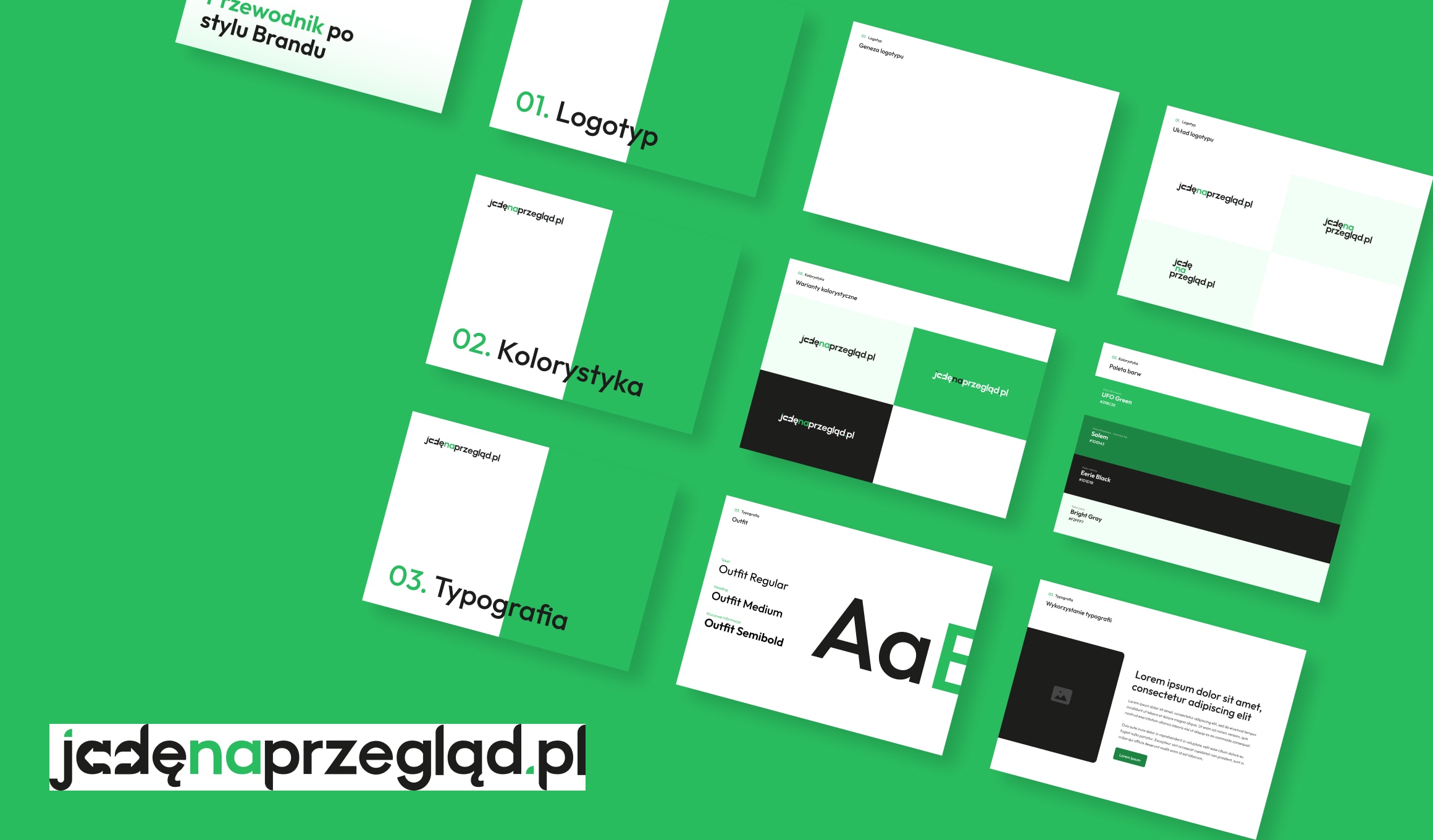
A new platform has to earn trust before anyone has heard of it. Station owners need it to look credible enough to put their business on. Drivers need it to feel simple and approachable, not like one more form to fill in. So we started with the brand and built the whole identity from scratch: the logo, the colour, the typography and the visual details that hold it together. All of it lives in a proper brandbook, with the rules that keep the platform looking like itself as it grows and more hands work on it. That identity is not a skin on top of the product. It runs straight into the design system the whole thing is built from.
An errand nobody enjoys, made simple for both sides
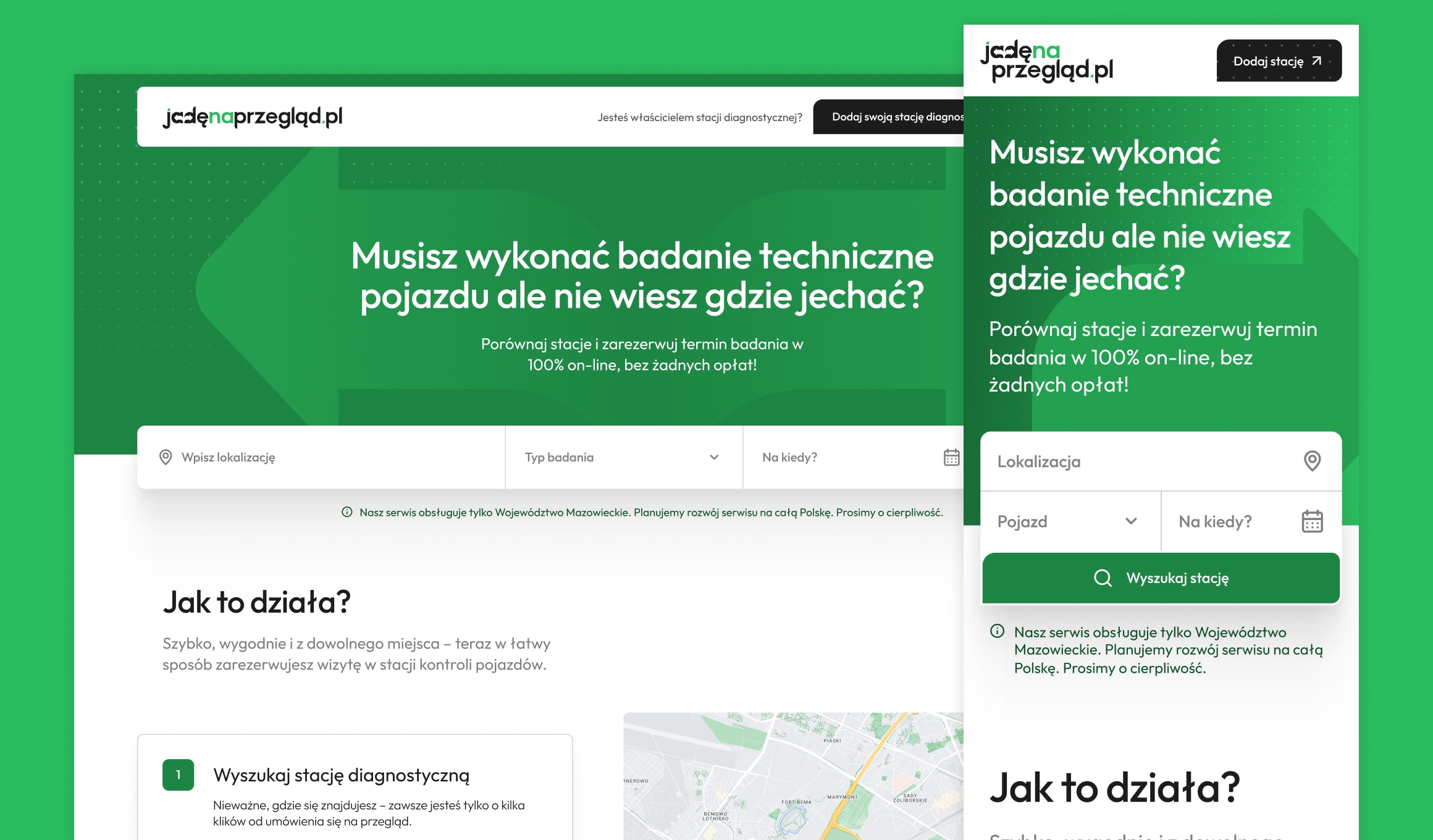
In Poland every vehicle needs a periodic technical inspection. Finding a slot that fits your schedule usually takes a couple of phone calls. Jadę na przegląd puts an end to that, anywhere in the country. A driver searches, sees which nearby stations have an opening for the exact test they need and books it online. On the other side, station owners get found by drivers looking right now and fill the quiet gaps in their day. We built the platform end to end, from the brand through the design to the code.
The heart of it: a map that only shows you real openings
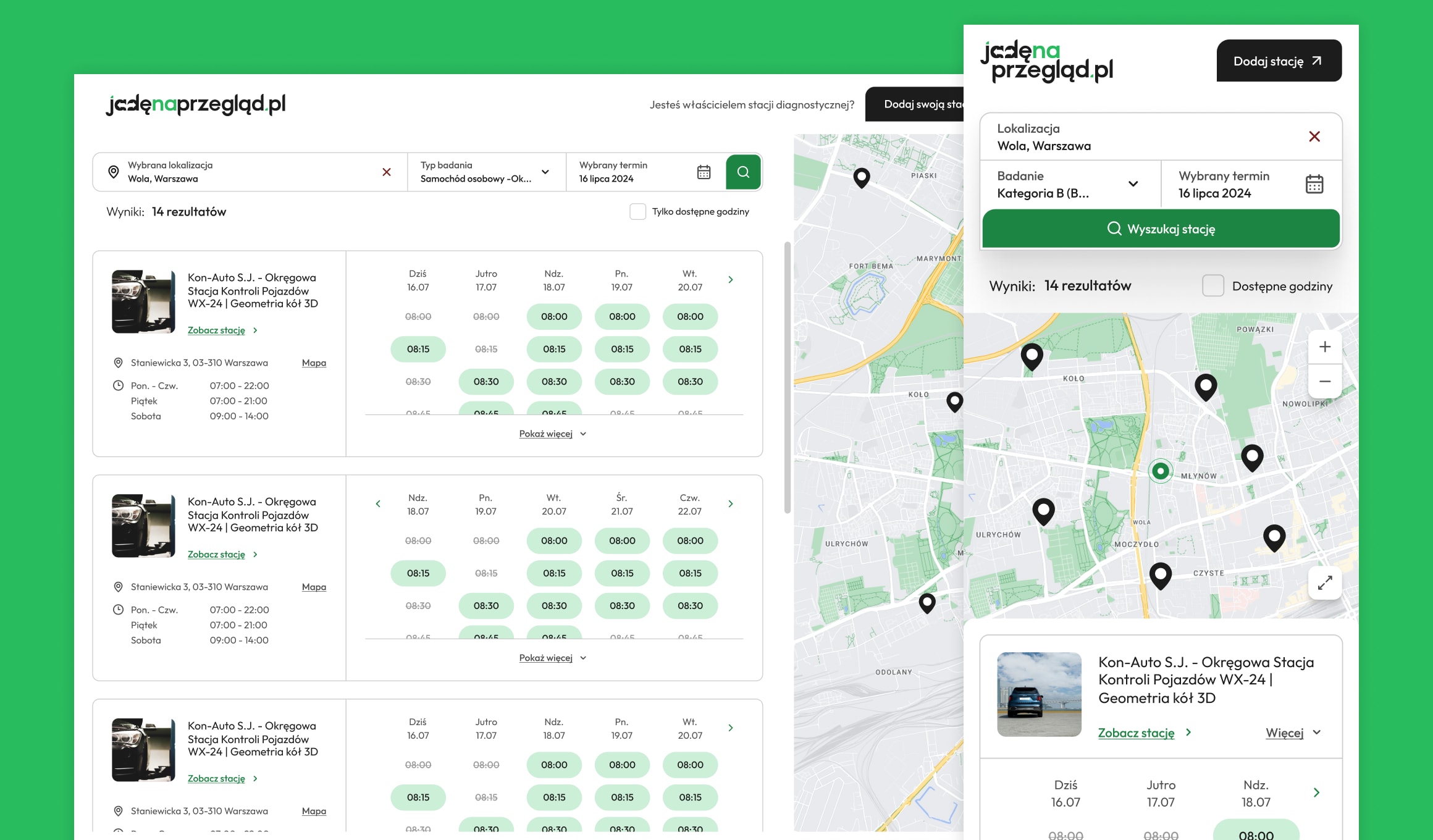
The heart of the product is the search. Pick where you are, the kind of inspection you need and a date, then watch the map fill with the stations that can actually take you. One checkbox narrows it further to stations with an open slot that day, so you are not looking at places you would only have to phone and be turned away by. Pan the map and the list follows the area you are looking at. Results sort by how close each station is to you. The list of tests behind the filter is the full official catalogue, five vehicle classes and around seventy kinds of inspection, so what you choose lines up with what the regulations actually distinguish. It turns a frustrating phone-around into a thirty-second search.
Booking that respects how a station really runs
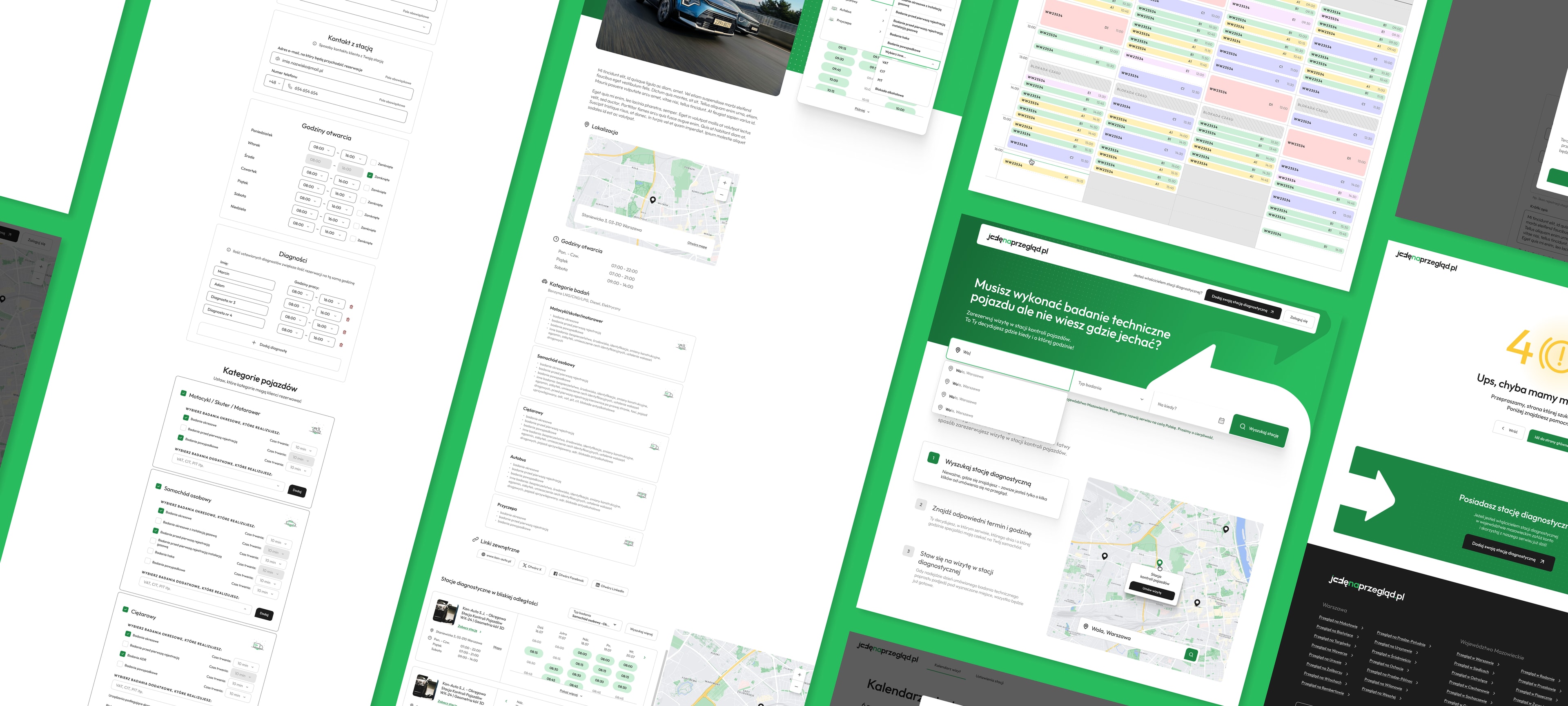
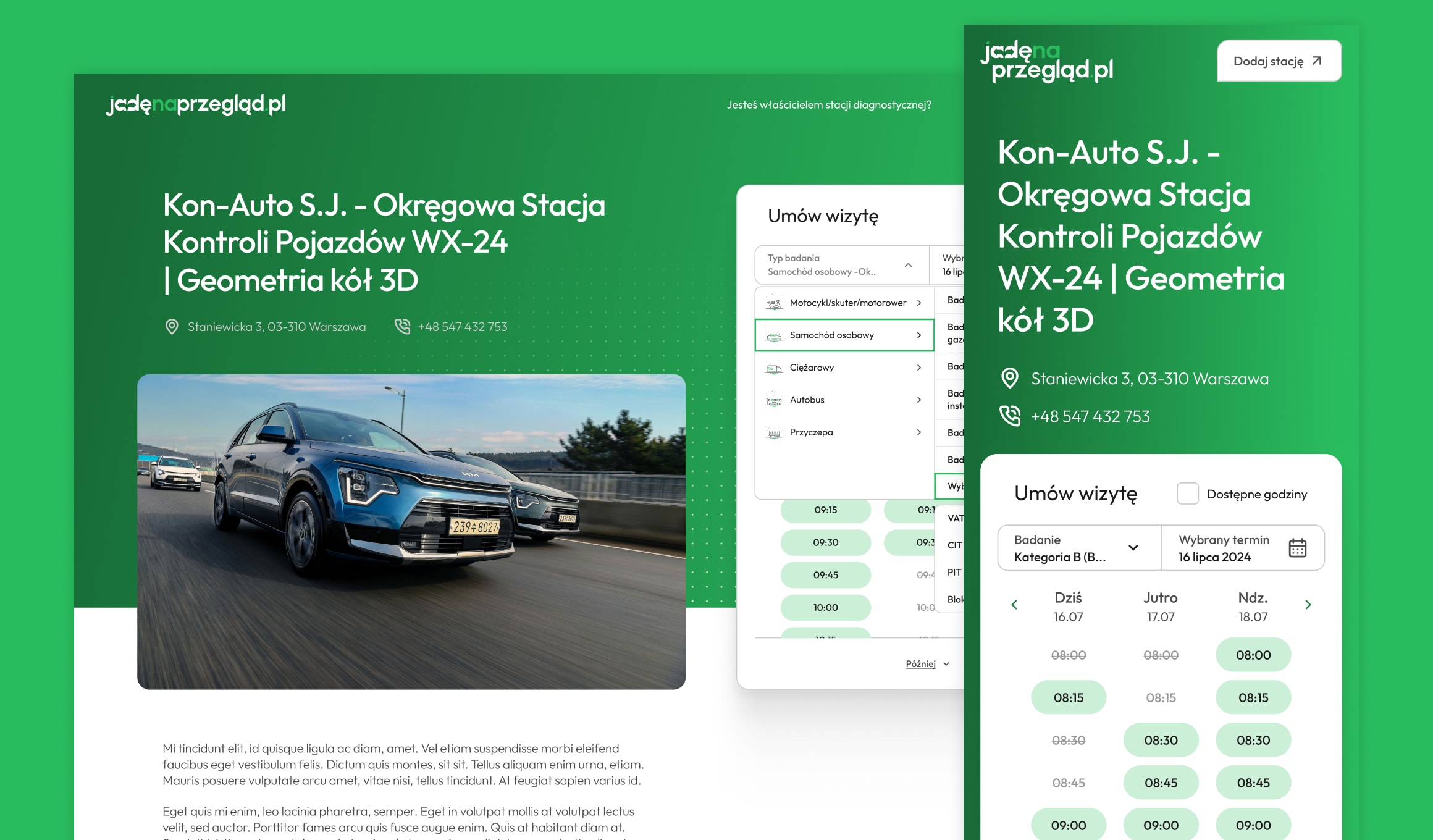
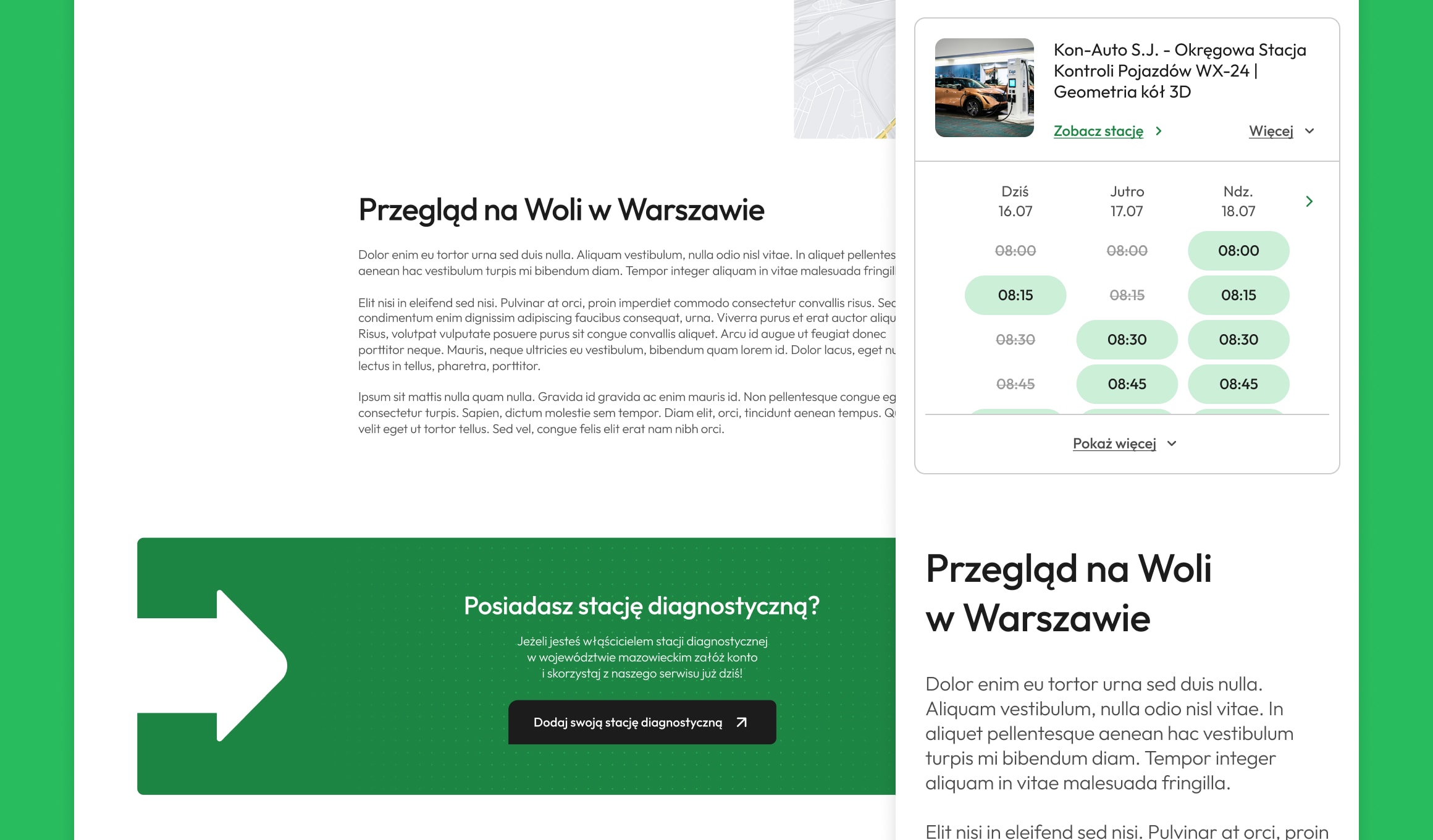
Behind an available slot sits more logic than it looks. A station's timeline is worked out live from its opening hours, how long the chosen test takes, how many inspectors are on that day and the hours each of them works, minus everything already booked or blocked off. When a driver picks a time, the system quietly assigns an available inspector to it, checking their shift and making sure nothing collides. The station does not lift a finger for a booking to land correctly on the right person's calendar. A confirmation email goes out with a cancel link and directions. The day before the visit, a reminder follows on its own.
One calendar the whole station runs from
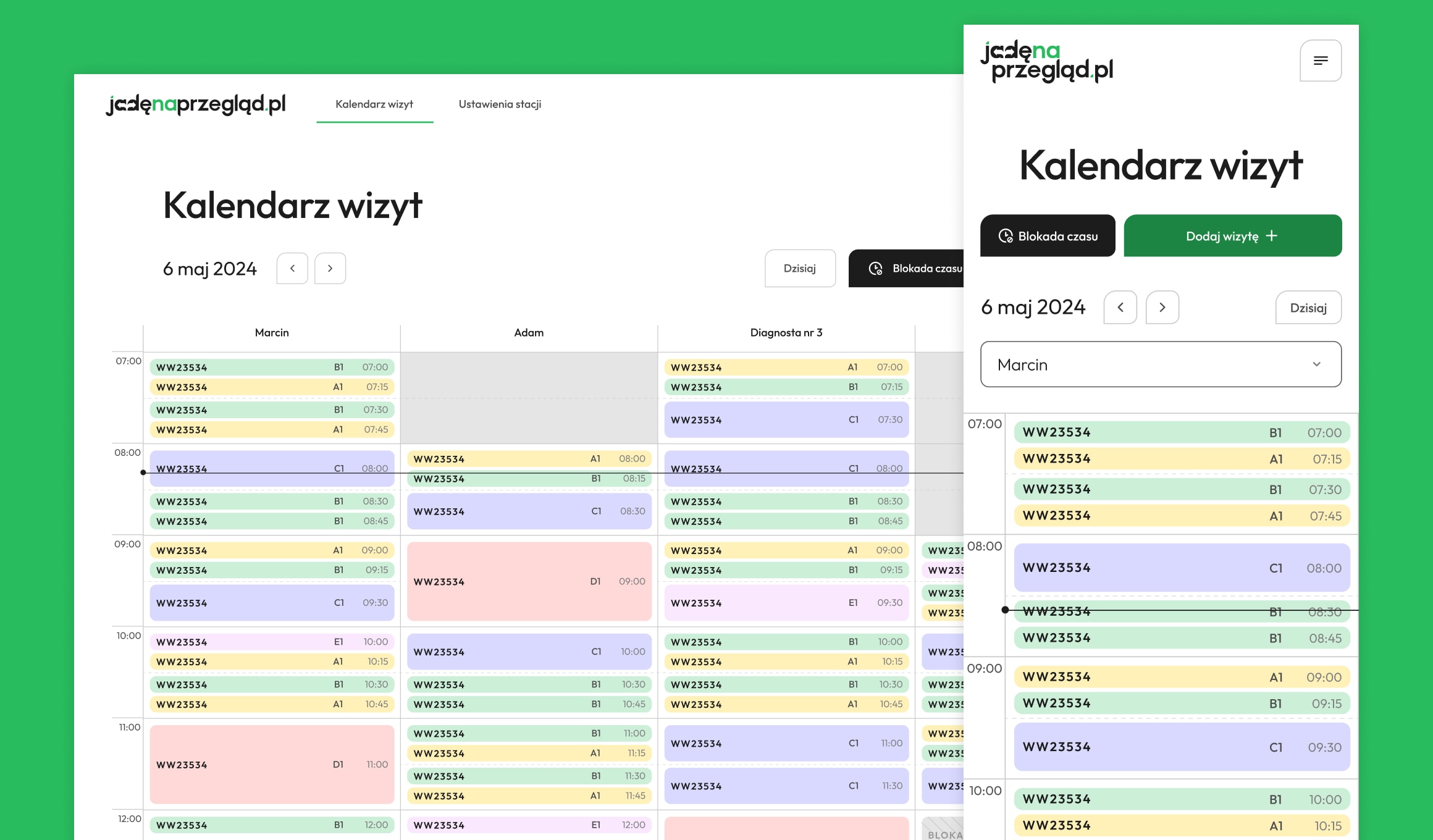
Owners run everything from a single panel. The appointment calendar shows the day or the week, filterable by inspector, with bookings and time blocks laid out where they fall. An owner can add a booking taken over the phone, move one, cancel one or block out time when an inspector is away. The customer is emailed automatically whenever their visit changes. Setting the station up is just as contained: opening hours per day, up to ten inspectors with their own shifts, then the exact tests the station offers with a duration set for each.
A directory kept clean, because trust is the point
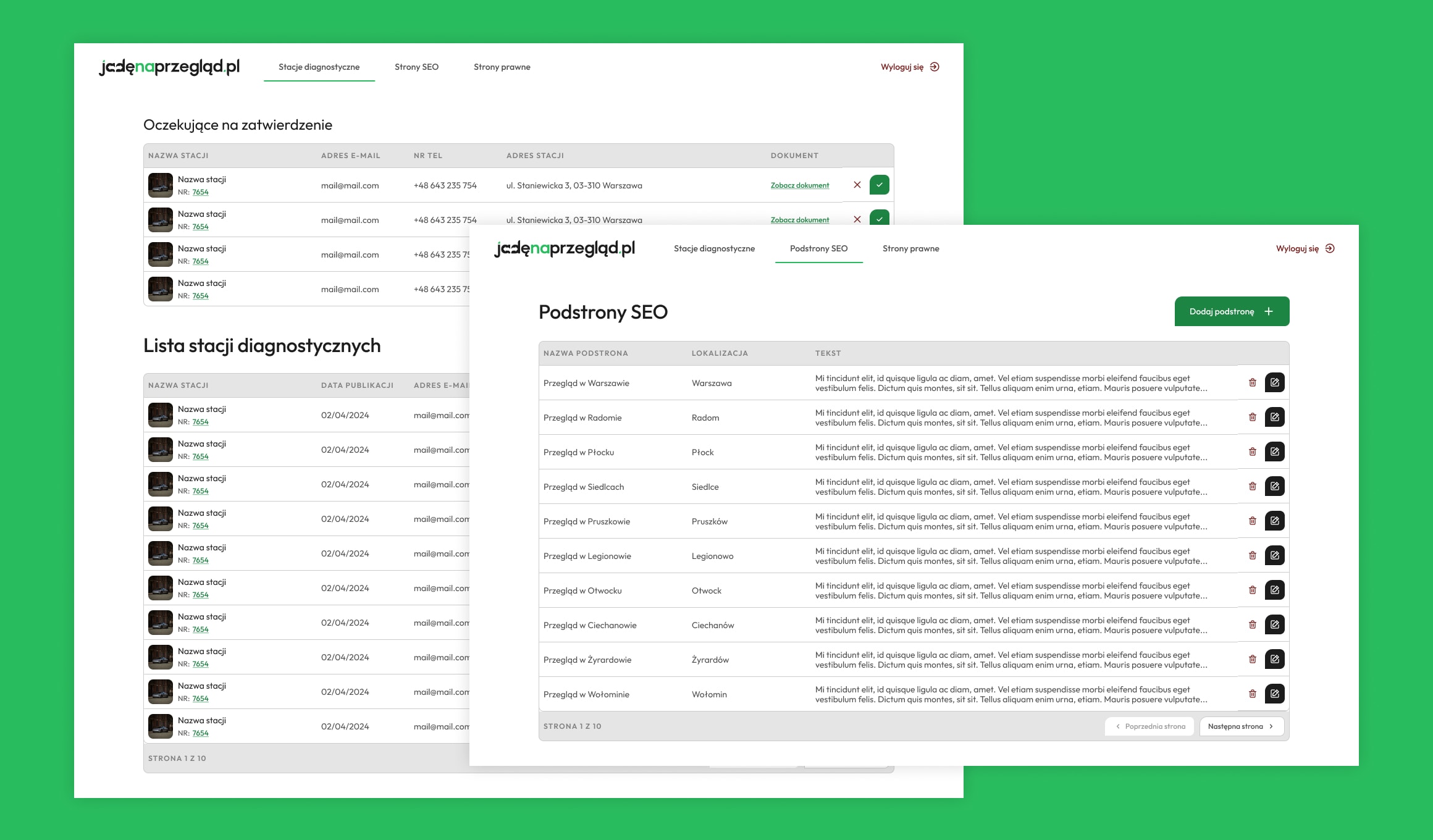
A directory is only worth using if someone is watching it, so every station is checked before it goes live. An owner registers, builds their profile and uploads a document proving they run the station. An administrator reviews it and either publishes the station or holds it back, with the owner kept in the loop by email at each step. If a station ever needs pulling, an admin can block it in a click. The same backoffice is where the team keeps the platform's legal pages up to date.
Local pages that help stations get found
For a platform whose whole job is discovery, search engines matter as much as the map inside the app. So we built local landing pages the team can spin up for any area, a page for inspections in Mokotów, another for Bielany, each with its own copy and the right stations for that spot. A driver arriving from Google lands somewhere relevant instead of a generic homepage. The stations on that page get seen. It is a quiet growth engine sitting under the product.
A monolith on Vercel, kept lean on purpose
We kept the build deliberately simple. The whole thing is one Next.js application that handles both the front-end and the back-end, talking to a PostgreSQL database through Prisma, with everything deployed on Vercel, blob storage and the reminder cron included. There is no separate API service to run and no extra infrastructure to babysit. That keeps the cost of building and running it low, which matters a great deal for a young platform trying to grow region by region.
Outcome
Jadę na przegląd turns a dreaded errand into a thirty-second job. The platform is nationwide, open to inspection stations anywhere in Poland. Drivers get an inspection booked in under a minute. Stations get found and keep their calendars full without the phone ringing off the hook.
Visit jadenaprzeglad.pl
Let's talk about your project idea!
Tell us about your project. We’ll help you plan the architecture, scope, and execution.
© Webalize 2026